

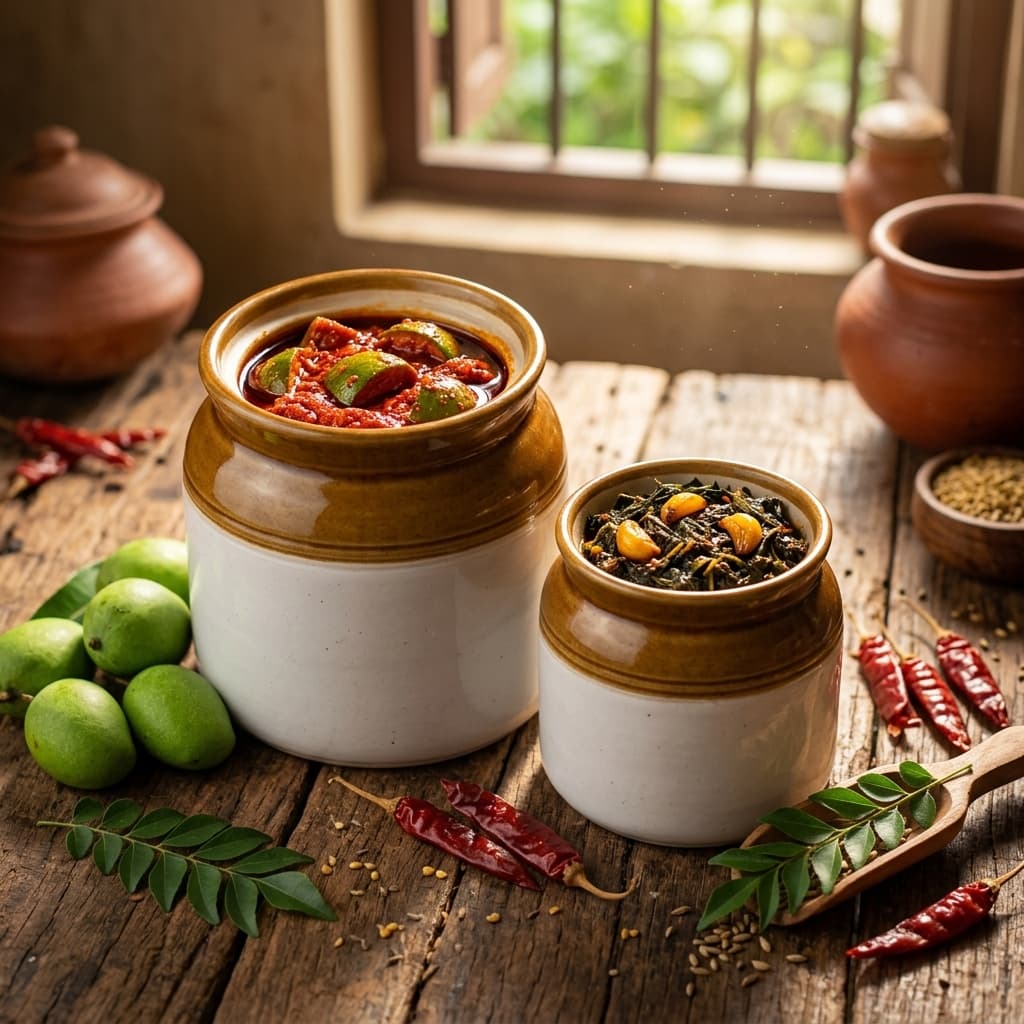
Aavalu and Menthulu: Why Mustard and Fenugreek Are the Backbone of Andhra Pickles
Everyone talks about the chilli in Andhra pickles. It's red, it's hot, it's impossible to miss. But if you ask grandmothers what makes avakaya taste like avakaya, many will point to two humble seeds: aavalu (mustard) and menthulu (fenugreek).
These two spices give Andhra pickles their sharp, slightly bitter, deeply savoury backbone. Without them, a mango pickle would just be sour and hot. With them, it becomes something you crave.
Aavalu: Mustard Seeds
How mustard tastes
Whole mustard seeds, when crackled in hot oil for tempering, taste nutty and mild. But ground raw mustard, the way it is used in avakaya, is a different story. When ground mustard meets moisture and salt, it develops a sharp, pungent, nose-tingling heat, similar in feeling to wasabi or English mustard.
That pungency is the soul of avakaya. In fact, the name avakaya comes from aavalu. It is, quite literally, the mustard pickle.
How mustard is used in pickles
In Andhra pickles, mustard appears in two ways:
- Ground mustard powder mixed into the masala, giving the sharp bite (avakaya is the best example)
- Whole mustard seeds in tempering, giving a gentle nutty crackle (common in paste-style pickles)
Which of our pickles use mustard
Almost all of them. Mustard seeds appear in the ingredients of our Avakaya, Magaya, Koru Pachadi, Lemon, Tomato, Gongura, Pandu Mirchi, Usiri, Ginger, Kothimeeri and Munakkaya pickles, and in our chicken, mutton and prawn pickles too.
Menthulu: Fenugreek Seeds
How fenugreek tastes
Raw fenugreek seeds are bitter. When gently roasted and ground, they become nutty, slightly sweet and maple-like, with a lingering bitterness. In small amounts, fenugreek adds depth and a savoury, almost caramel note. Too much, and the pickle turns unpleasantly bitter, which is why getting the quantity right is part of the craft.
How fenugreek is used in pickles
- Roasted and ground into the masala for depth
- Whole, in tempering for some pickles
Fenugreek balances the sourness of mango, lemon and gongura and gives Andhra pickles their characteristic slightly bitter finish.
Which of our pickles use fenugreek
Fenugreek (also listed as methi) appears in the ingredients of our Avakaya, Magaya, Koru Pachadi, Lemon, Tomato, Gongura, Pandu Mirchi, Usiri and Ginger pickles, and in our chicken, mutton, prawn and gongura non-veg pickles.
How Mustard and Fenugreek Work Together
Think of an Andhra pickle as a balance of five forces:
- Sour from mango, lemon, tamarind, tomato or gongura
- Hot from red chilli
- Salty from salt
- Pungent from mustard
- Bitter-savoury from fenugreek
Mustard and fenugreek make up two of those five. Together, they turn a simple sour-hot pickle into one with layers: the first sharp hit of mustard, the slow warmth of chilli, and the bitter-nutty finish of fenugreek that makes you want another bite.
The Other Supporting Spices
Mustard and fenugreek lead, but they rarely work alone. Depending on the pickle, our ingredient lists also include:
- Turmeric (pasupu): Golden colour and an earthy note
- Garlic (vellulli): Sweet, savoury depth, especially in avakaya, lemon and the non-veg pickles
- Asafoetida (inguva): A pinch in avakaya, magaya and koru pachadi for a rounded, savoury aroma
- Cumin (jeelakarra): Warmth in tomato, gongura, usiri, ginger and kothimeeri pickles
- Curry leaves (karivepaku): A fresh, aromatic lift
- Cloves, cardamom and cinnamon: Warm spice in koru pachadi and our chicken, mutton and prawn pickles
Each one plays a small role, but mustard and fenugreek remain the backbone that makes a pickle taste unmistakably Andhra.
Mustard, Fenugreek and Tradition
Mustard and fenugreek have long been part of traditional pickle-making across India, and Andhra households have always used them generously. Along with salt and oil, they are part of the familiar ingredient list of a home pickle. You can read more about the traditional side of preservation in our post on the science of salt and oil in Andhra pickles.
Tasting the Difference Yourself
Try this at home: take a small taste of our Avakaya, and pay attention to the moment after the chilli hits. That sharp tingle in your nose? Mustard. That slightly bitter, savoury finish that lingers? Fenugreek.
Then compare it with Kothimeeri Pickle, where mustard is only used in the tempering with cumin and black gram. You'll taste how different a pickle feels when mustard is in the background rather than the lead.
A Note on Allergies
Mustard is a known allergen for some people. If you have a mustard allergy or any other food allergy, please read each product page's ingredient list carefully and contact us before ordering if you have questions.
Frequently Asked Questions
Why is avakaya called avakaya?
It comes from aavalu, the Telugu word for mustard. Ground mustard is the defining ingredient of avakaya.
Why do some pickles taste slightly bitter?
That's usually fenugreek (menthulu). A gentle bitterness is part of the traditional Andhra pickle taste.
Is the mustard in pickles the same as mustard oil?
No. Our pickles use mustard seeds in the masala and groundnut oil as the oil.
Do all your pickles contain mustard?
Mustard seeds appear in the ingredient lists of most of our pickles. Please check each product page.
Taste the Backbone of Andhra Pickles
Order a jar of Avakaya and taste aavalu and menthulu at their best, or explore all our vegetarian pickles. Every jar is made fresh after you order in our Tadepalligudem kitchen, and Cash on Delivery is available for serviceable pincodes.
With love from our kitchen,
Vidya
Founder, Pickle Basket
About the Author
Vidya
Founder, Pickle Basket