

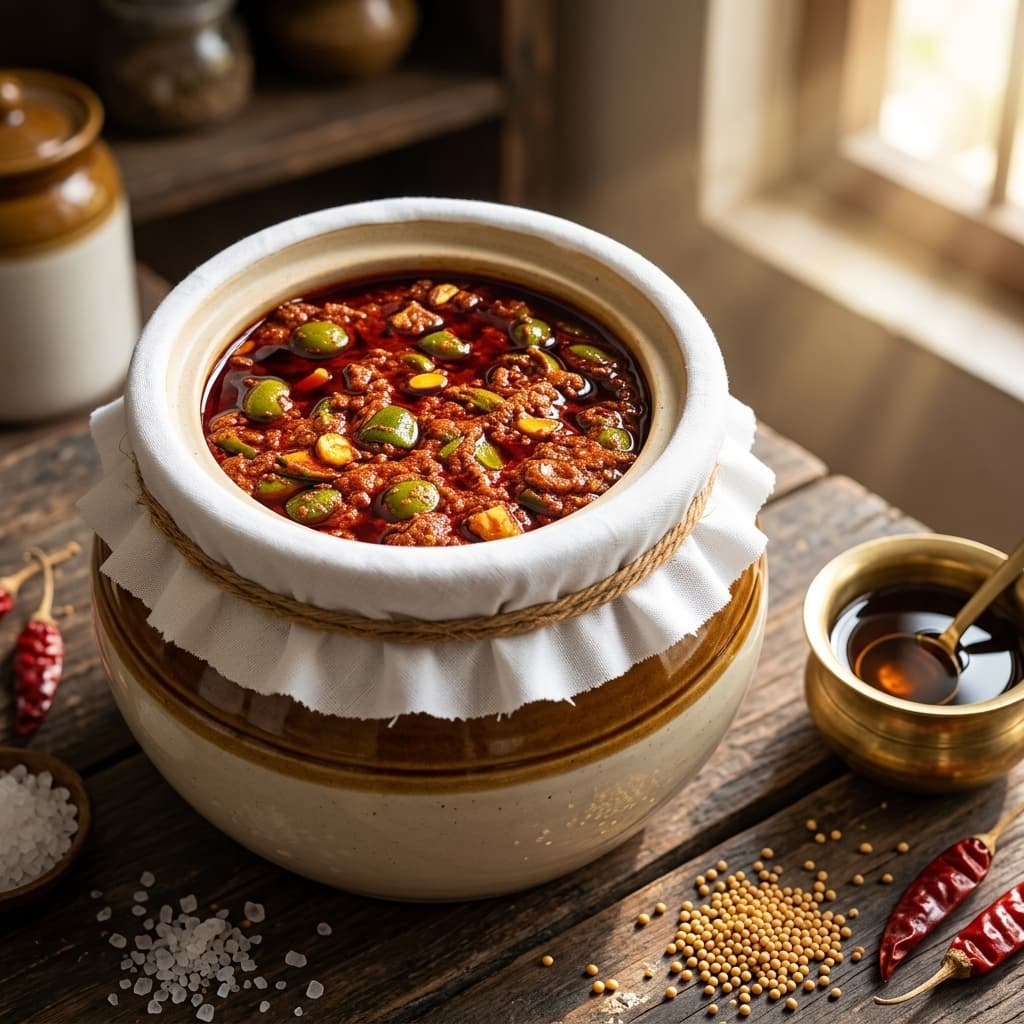
The Science of Salt & Oil: How Andhra Pickles Last for Months Without Preservatives
For generations, the kitchens of Andhra Pradesh, especially in the fertile Godavari region, have been famous for their vibrant, fiery, and incredibly long-lasting pickles. Jars of Avakaya (raw mango pickle), Gongura Pachadi, and even non-vegetarian delicacies like chicken and mutton pickles sit proudly on pantry shelves for months.
Yet, if you look at the ingredients of a genuine, home-style Andhra pickle, you won’t find a single mention of Sodium Benzoate, Potassium Sorbate, or any other chemical preservative.
How do these pickles survive the intense Indian summer and high humidity without spoiling? The answer lies in the ancient, precise science of natural preservation—a masterclass in food chemistry perfected over centuries by grandmothers and home makers.
Let’s unpack the science behind how traditional Andhra kitchens preserve their pickles naturally.
---
1. Osmosis and the Power of Sea Salt
At the heart of natural preservation is a simple biological process called osmosis.
Bacteria and molds need water to grow and multiply. When you add a precise quantity of high-quality sea salt (crystal salt, ground down) to a pickle, it does two things:
- It draws out the moisture from the raw ingredients (like mango pieces, ginger, or tomatoes) through dehydration.
- It creates a highly concentrated hypertonic environment. If any microbial cell tries to enter the pickle, the high salt concentration draws the water right out of the microorganism's cell, causing it to shrivel and die (a process called plasmolysis).
In traditional Andhra kitchens, salt is never added randomly. The ratio of salt to the main ingredient is calculated with mathematical precision based on recipes passed down through generations. Too little salt, and the pickle will spoil; too much, and it becomes unpalatable.
---
2. The Anaerobic Shield of Cold-Pressed Oils
Open any traditional jar of Andhra pickle, and you will see a glistening layer of oil floating on top. This is not just for flavor—it is a critical physical barrier.
Oil acts as an anaerobic shield. Because oil is hydrophobic and less dense than water, it forms an airtight seal on top of the pickle. This layer prevents oxygen from reaching the pickle below.
- Most food-spoiling molds and aerobic bacteria require oxygen to survive and grow.
- By blocking oxygen, the oil completely prevents these aerobic spoilage organisms from multiplying.
Furthermore, traditional Andhra kitchens exclusively use cold-pressed oils (primarily sesame/gingelly oil or groundnut oil). Unlike refined oils, cold-pressed oils retain their natural antioxidants (like sesamol and sesamolin in sesame oil), which act as natural food stabilizers and prevent the oil itself from going rancid.
---
3. Guntur Red Chilies: Nature's Antimicrobial
Andhra pickles are famous for their fiery heat, largely thanks to the legendary Guntur red chilies. But capsaicin—the chemical compound that gives red chilies their signature burn—is also a highly potent natural antimicrobial agent.
Studies have shown that capsaicin can inhibit the growth of a wide range of food-borne pathogens and spoilage bacteria. By combining a generous amount of pure Guntur chili powder with other antimicrobial spices like mustard seeds (avakaya literally means mustard-mango) and fenugreek, traditional cooks create a highly hostile environment for any potential contaminants.
Mustard seeds contain allyl isothiocyanate, a compound released when the seeds are crushed and hydrated, which has been scientifically proven to have exceptionally strong antifungal and antibacterial properties.
---
4. The Magic of Slow Aging and Sunlight
Traditional preservation doesn’t stop at the ingredients; the process itself is a key factor.
After mixing, traditional pickles are stored in ceramic jars (jaadilu) and placed in clean, dry, sunny spots.
- Solar Sterilization: Gentle warmth from the sun acts as a mild heat treatment, helping the spices blend and release their natural essential oils, which further preserve the mix.
- Slow Lactic Acid Fermentation: Over the first few days, a subtle lactic acid fermentation occurs. This slightly lowers the pH of the pickle. A lower pH (increased acidity) acts as another natural barrier against harmful bacteria, which prefer neutral or alkaline conditions.
---
The Pickle Basket Philosophy: Honoring the Science
At Pickle Basket, we do not cut corners. We follow these precise scientific principles of traditional Godavari preservation for every single jar we make.
We use 100% cold-pressed oils, hand-selected Guntur chilies, precise sea salt ratios, and sun-dry our ingredients in small batches in Tadepalligudem, Andhra Pradesh. We prepare every jar fresh after you place your order, meaning you get the peak of flavor and the highest natural shelf life (up to 9-12 months for veg pickles, and 6 months for non-veg) without a single drop of artificial chemicals or preservatives.
Taste the purity of science and tradition—order your fresh, preservative-free jar from Pickle Basket today!
About the Author
Vidya
Founder, Pickle Basket