

Best Pickle for Curd Rice: Which Andhra Pachadi to Pair with Perugu Annam
In our house, nobody leaves the table before perugu annam. You can have pulihora, pappu, a vegetable curry and rasam, but the meal is not finished until a small mound of rice is mashed with curd and someone passes the pickle jar down the table. My father would wait for that moment the whole lunch. "Ippudu asalu bhojanam," he used to say. Now the real meal begins.
Curd rice looks like the simplest dish in a Telugu kitchen, and it is. That is exactly why the pickle beside it matters so much. Plain, cool curd has no strong taste of its own, so whatever sits next to it decides how the last course feels. A sour pickle makes it bright. A sweet-sour one makes it comforting. A green, herby one makes it feel light and fresh.
People often ask us on WhatsApp, "Which one should I buy only for curd rice?" So here is the honest answer from our kitchen, jar by jar.
Why Curd Rice and Pickle Belong Together
Curd rice is eaten across South India under many names: perugu annam or daddojanam in Telugu homes, thayir sadam in Tamil Nadu, mosaranna in Karnataka. It is made from soft cooked rice mixed with curd (dahi), sometimes loosened with a little milk or buttermilk, and often finished with a tempering of mustard, curry leaves and green chilli.
The pairing works because the two are opposites. Curd rice is mild, creamy and slightly sour. An Andhra pickle is concentrated: salt, chilli, mustard and oil packed into a single spoon. When you take a little of both in one bite, the curd softens the sharpness of the pickle, and the pickle wakes up the curd. Neither is as good on its own.
There is also a practical side. In Telugu cuisine, a full meal usually moves from strong flavours to gentle ones, and curd rice is the gentle end. A small piece of pickle lets you close the meal with a little flavour without adding another dish to cook.
The Classic Choice: Lemon Pickle
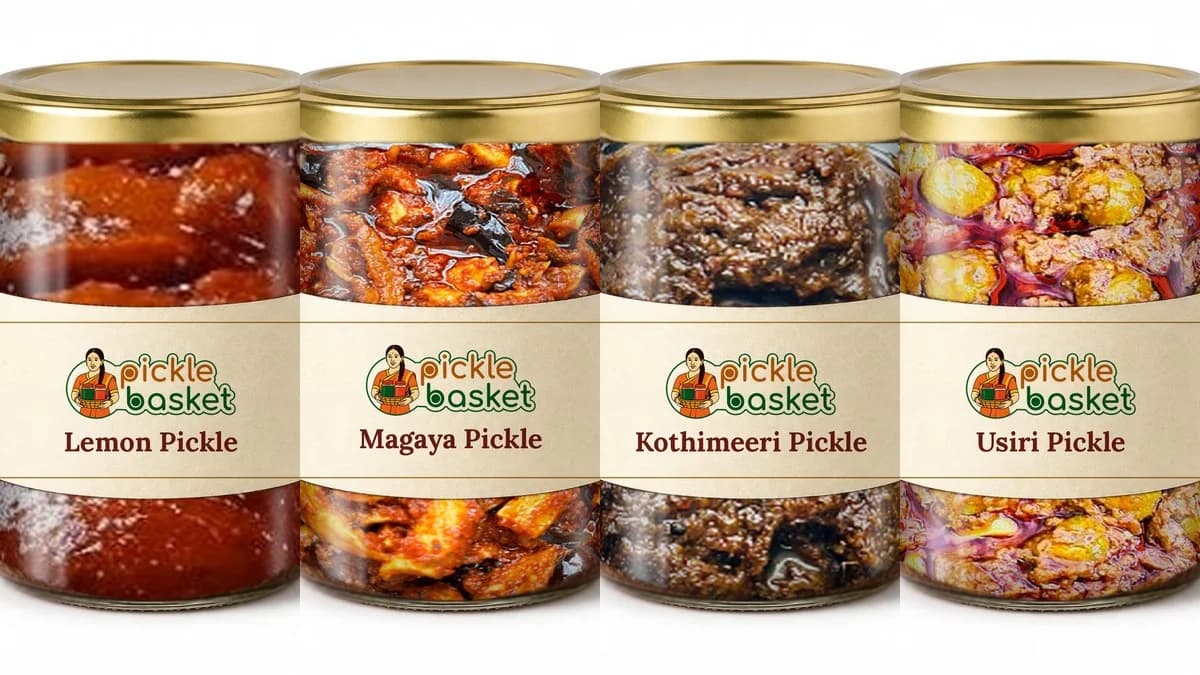
If you ask ten Telugu grandmothers which pickle goes with curd rice, most will say nimmakaya. Our Lemon Pickle is made with fresh lemon pieces, Andhra red chilli, mustard, methi, ginger and garlic in groundnut oil.
Lemon pickle suits curd rice because its sourness is clean and sharp, and the skin of the lemon gives you something to chew against the softness of the rice. You do not need a lot. Keep one piece on the edge of your plate and nibble a little with every few spoons. Once the piece is gone, a touch of the masala mixed into the last bit of rice is just as good.
If you want to know more about this jar on its own, we wrote a full post on Andhra lemon pickle.
The Comfort Choice: Magaya
For people who find avakaya too fierce with curd, Magaya is the gentler mango option. It is made from peeled raw mango pieces that are salted and dried, then pickled with red chilli, mustard, fenugreek, a little jaggery and tamarind in groundnut oil.
The dried mango pieces are slightly chewy, and the jaggery rounds off the chilli, so with curd rice it tastes sweet, sour and warm together. This is the one I give to children and to friends from other states who are trying curd rice with pickle for the first time. If you are confused between the two mango pickles, our avakaya vs magaya comparison explains the difference.
The Fresh Choice: Kothimeera Pachadi
Not everyone wants red chilli at the end of a meal. Our Kothimeeri Pickle is made from fresh coriander leaves ground with green chillies, garlic, tamarind and a little jaggery, then tempered with mustard, cumin and black gram in groundnut oil.
Because it is a smooth, ground pachadi, it mixes straight into curd rice. Stir half a spoon through a small bowl and the rice turns pale green and smells of coriander. It feels lighter than the oily red pickles, which is why many people prefer it at dinner. There are more ideas in our post on kothimeera pachadi.
The Tangy Choice: Usiri Pickle
Usiri Pickle is whole amla pickled the Andhra way with red chilli, mustard, fenugreek, curry leaves and cumin in groundnut oil. Amla has its own sharp, slightly astringent sourness that is different from lemon. It lingers.
With curd rice, usiri works best for people who enjoy a strong sour taste. Break one amla with your fingers, take a little flesh and masala with each bite, and leave the seed aside. Our usiri pickle post has more about how Telugu homes use it.
For Those Who Want Mango Without the Big Pieces
Some people love mango pickle with curd rice but do not like biting into large pieces. Koru Pachadi is raw green mango grated fine and pickled with red chilli, mustard, fenugreek, garlic and a warm blend of cloves, cardamom and cinnamon. Since it has no big pieces, a small amount spreads evenly through the rice, and every spoon gets a little mango.
And of course, there are people for whom only Avakaya will do, even with curd rice. It is the strongest of these pairings, so take a smaller piece than you think you need.
Matching the Pickle to the Kind of Curd Rice
Not every bowl of perugu annam is the same, so the best pickle changes too.
- Plain mashed curd rice, no tempering: lemon or usiri. The rice is very neutral, so a clear sour pickle gives it the most lift.
- Tempered curd rice with mustard, curry leaves and green chilli: magaya or koru pachadi. The tempering already has some heat, so a sweet-sour mango pickle balances it.
- Curd rice with grated cucumber, carrot or pomegranate: kothimeera pachadi. The fresh vegetables and the herby pickle feel right together.
- Thin curd rice with extra buttermilk, the way many people eat it in summer: a little lemon pickle masala stirred in, rather than a whole piece.
- Curd rice packed in a lunch box: keep the pickle in a small separate container so the rice does not turn sour by lunchtime.
Small Habits That Make It Better
- Use fresh curd that is only mildly sour. If the curd is already very sour, choose a sweeter pickle like magaya so the bowl does not feel harsh.
- Let the rice cool a little before adding curd. Rice that is warm, not hot, mixes into a creamy texture.
- Add a pinch of salt to the curd rice, then taste with the pickle. Pickles are salty, so go easy on salt in the rice.
- Take the pickle with a dry spoon. It keeps the jar clean for the next meal. Our guide on storing homemade pickles has a few more kitchen habits worth following.
- Keep two jars open. In many homes, one sour pickle and one sweet-sour pickle sit side by side, and everyone picks their own.
A Simple Curd Rice Order
If you are setting up your kitchen for perugu annam, a small mixed order is the easiest start: one Lemon Pickle for the classic pairing, one Magaya for the gentle palates, and one Kothimeeri Pickle for nights when you want something green. Our veg pickles are ₹219 for 250 g, ₹429 for 500 g and ₹799 for 1 kg, so three 250 g jars let you find your family's favourite before you buy a bigger size.
You can see every jar on our vegetarian pickles page, and the meat pickles are on the non-veg page.
Order on Our Site or on WhatsApp
Order on picklebasket.in, or message us on WhatsApp at +91 9848658989 and tell us how your family likes its curd rice. We will help you choose.
Cash on Delivery is available on serviceable pincodes. You pay a ₹99 advance online to confirm the order, and our delivery partner adds a ₹50 COD fee. Paying fully online by UPI or card skips that fee. Orders are usually dispatched within 1 to 2 business days, and the latest terms are on our shipping policy page.
From our Godavari kitchen to the last course of your meal,
Vidya
Founder, Pickle Basket
About the Author
Vidya
Founder, Pickle Basket