

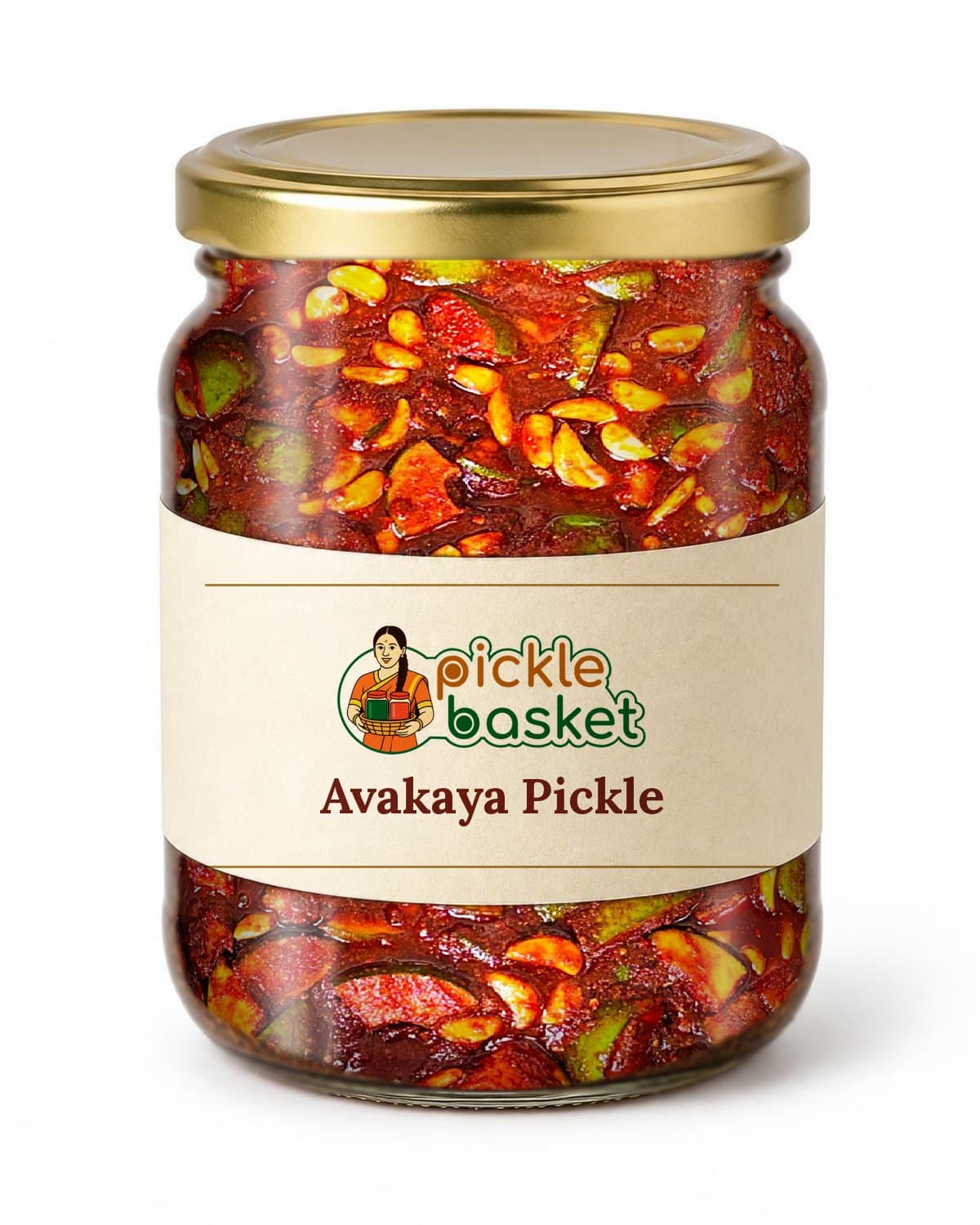
How to Store Homemade Pickles: Keep Your Andhra Pickle Fresh Till the Last Spoon
When a jar of homemade pickle arrives at your door, the first spoon is always the best moment. The second question comes right after: how do I keep this tasting just as good until the last spoon? Many of us grew up watching amma or ammamma handle the pickle jar with a set of quiet rules. Dry spoon only. Lid closed tight. Never keep it near the stove. Those rules were not superstition. They are the reason a good Andhra pickle stays fresh for months.
This guide explains how to store homemade pickles the right way, especially Andhra pickles that are made with oil, salt and spices and no artificial preservatives. Whether you just ordered your first jar online or you have a shelf full of pachadi, these simple habits will help every jar last.
Why Homemade Pickles Need a Little Care
Factory pickles often rely on vinegar and added preservatives to sit on a shop shelf. Homemade Andhra pickles work differently. They are protected by a generous layer of oil, the right amount of salt, and spices like mustard, fenugreek and red chilli. If you want to understand the science behind this, our article on how salt and oil preserve Andhra pickles explains it simply.
The important point is this: that natural protection only works if moisture and dirt stay out of the jar. Almost every spoiled pickle we hear about comes back to one of three things: a wet spoon, an open lid, or too much heat.
The Golden Rules of Pickle Storage
1. Always use a clean, completely dry spoon
This is the rule every Telugu grandmother repeats. Even a few drops of water, or a spoon that touched rice, curd or dal, can bring in moisture and lead to fungus on top of the pickle. Keep a dedicated dry spoon for each jar if you can. Never put leftover pickle from your plate back into the jar.
2. Keep the oil layer on top
The oil that floats on top of a good Andhra pickle is not extra. It acts like a seal that keeps air away from the pieces below. When you take out pickle, press the remaining pieces down gently with the spoon so they stay under the oil. If the top looks dry after a few weeks, that is a sign you have been taking out more oil than pickle.
3. Close the lid tightly every time
Air and kitchen humidity are slow enemies. A loosely closed lid lets moisture in and lets the aroma escape. Close the jar firmly as soon as you have served yourself.
4. Store in a cool, dark, dry place
Keep the jar away from the stove, the oven, the window that gets afternoon sun, and the sink. A kitchen cupboard or a shelf in the pantry works well. Heat and direct sunlight can make the oil go stale faster and fade the spices.
5. Use glass or food-grade containers
If you move pickle into a smaller jar for daily use, choose a clean, fully dry glass or ceramic jar. Avoid thin plastic or metal containers that can react with the sourness of tamarind, lemon or gongura.
A Smart Habit: The Small Daily Jar
Many Andhra homes follow a simple trick. Keep the big jar closed and untouched in the cupboard, and fill a small jar with one or two weeks' worth of pickle for the dining table. The small jar gets opened every day; the big jar stays sealed and safe. When the small jar is empty, wash it, dry it completely in the sun or with a clean cloth, and refill it with a dry spoon.
This is especially useful for families who eat pickle at every meal, or if you order the larger 1 kg packs to save money.
Should You Keep Pickles in the Fridge?
This is one of the most common questions we get. The honest answer depends on the pickle.
Veg pickles like Avakaya, Magaya, Lemon Pickle, Gongura Pickle and Usiri Pickle are traditionally kept at room temperature in a cool, dry place. Refrigeration is not usually needed if you follow the rules above, though in very hot and humid weather some families prefer to keep the daily jar in the fridge.
Non-veg pickles like Chicken Pickle, Prawn Pickle and Mutton Pickle need more care. Once opened, keeping them in the refrigerator is the safer choice, especially in summer. Always follow the storage note printed on the label of your jar, because that guidance is written for that specific pickle.
If you refrigerate a pickle, the oil may turn cloudy or slightly thick. That is normal. Take out what you need and let it sit for a few minutes at room temperature before eating, and close the jar and return it quickly.
How to Tell If a Pickle Has Gone Bad
A well-stored pickle can last a long time, but it is good to know the warning signs. Throw the pickle away if you notice:
- White, green or black fuzzy spots on the surface
- A sour, rotten or fermented smell that is very different from the usual spicy aroma
- Pieces that have turned slimy or mushy
- Bubbles or fizzing when you open the lid
Do not try to scrape off fungus and eat the rest. When in doubt, it is safer to discard the jar.
Storing Pickles When You Order Online
When pickles travel to you by courier, a few extra steps help:
- Check the jar when it arrives. Make sure the seal is intact and nothing has leaked.
- Wipe the outside of the jar with a dry cloth before putting it away.
- Let it settle. After a long journey, the oil may have moved around. Give the jar a day on the shelf and the oil will rise to the top again.
- Note the date you open each jar, so you know which one to finish first.
At Pickle Basket, every jar is made fresh in small batches in Tadepalligudem, in the Godavari region of Andhra Pradesh, only after you place your order. The recipes come from the family kitchen of our founder, Vidya Rekha Kondreddi. Because nothing comes out of old stock, your pickle starts its life in your kitchen as fresh as it can be. If you are ordering for the first time, our guide to the best Andhra pickles to buy online can help you choose.
Quick Storage Checklist
- Dry spoon, every single time
- Pickle pieces pressed under the oil
- Lid closed tight right after use
- Cool, dark cupboard away from the stove and sink
- Small daily jar, big jar kept sealed
- Non-veg pickles in the fridge after opening
- Follow the label on each jar
Frequently Asked Questions
How long do homemade Andhra pickles last?
It depends on the type of pickle, the ingredients and how carefully it is stored. Oil-based veg pickles stored with a dry spoon in a cool place usually last much longer than non-veg pickles. Always check the label on your jar for the recommended period.
Do I need to refrigerate pickles after opening?
Veg Andhra pickles are traditionally kept at room temperature in a cool, dry place. Non-veg pickles such as chicken, prawn and mutton are safer in the refrigerator after opening, especially in hot weather.
Why is there so much oil on top of my pickle?
The oil layer protects the pickle from air and moisture. It is a key part of how traditional Andhra pickles stay fresh without artificial preservatives, so do not drain it away.
What should I do if I see fungus on my pickle?
Discard the jar. Scraping off the top layer is not safe because spoilage may have spread below the surface.
Bring Home a Fresh Jar
Good storage starts with a good pickle. Explore our veg pickles and non-veg pickles, or browse the full range on our products page. Every jar is made by hand after you order, the way it has always been made in Andhra homes, and with these simple habits it will taste just as good on the last spoon as on the first.
About the Author
Vidya
Founder, Pickle Basket