

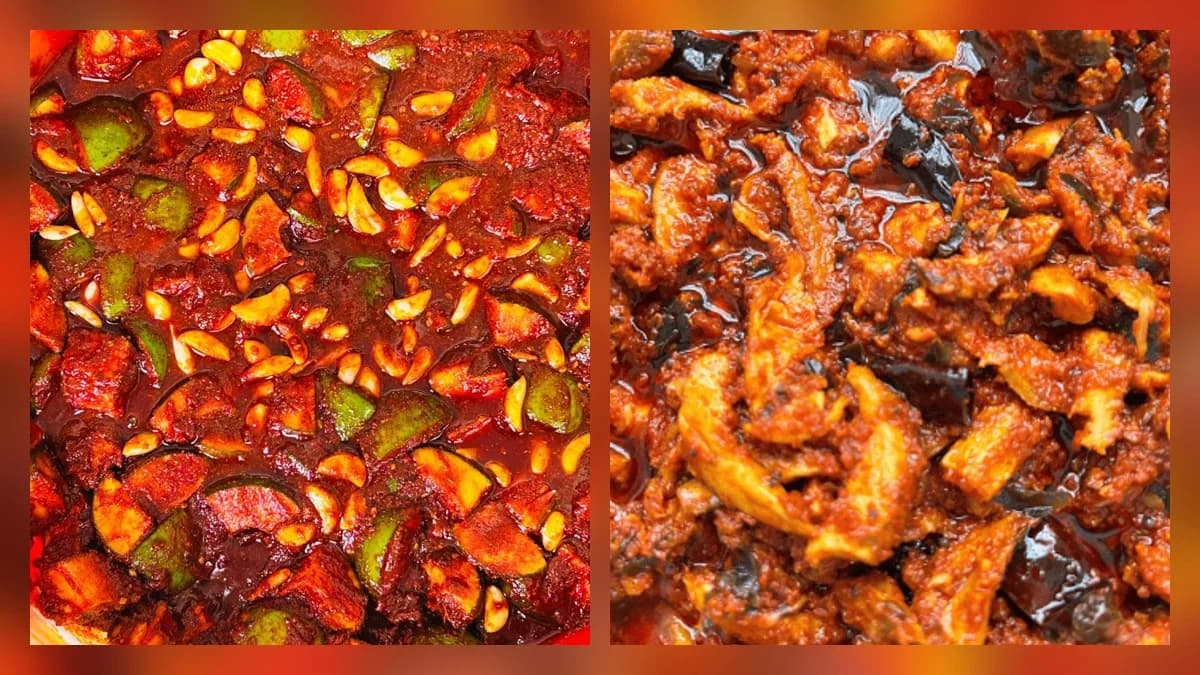
Avakaya vs Magaya: Which Andhra Mango Pickle Belongs in Your Kitchen?
Ask anyone from Andhra which pickle they would take with them to a desert island, and most will say Avakaya without even thinking. But ask the same person's Ammamma, and she may quietly say Magaya. Both are mango pickles. Both are made in the same summer season, when raw mangoes fill the markets. And yet they taste so different that many Telugu homes keep both jars on the shelf, side by side, all year round.
If you have ever stood looking at our menu wondering which one to order, this guide is for you. Let us sit down together and talk about these two old friends of the Telugu kitchen.
Avakaya: The King of Andhra Pickles
Avakaya is the pickle most people picture when they hear "Andhra pickle". It is bold, red, oily and fiery, and it carries the smell of a Telugu summer.
How Avakaya is made
For Avakaya, firm raw mangoes are washed, dried completely and cut into chunky pieces with the hard inner shell (tenka) still attached. Keeping the skin and shell on is what gives Avakaya its famous bite. These pieces are then mixed with three main things:
- Red chilli powder, plenty of it, which gives the deep red colour
- Aavalu (mustard powder), the ingredient that gives Avakaya its name and its sharp, nose-tickling flavour
- Salt and oil, traditionally groundnut or sesame oil, poured generously so the pieces stay covered
Many families also add whole garlic cloves and a little menthulu (fenugreek). After mixing, the jar is left to rest for a few days so the mango pieces soak up the masala, and then it is stirred well before serving.
How Avakaya tastes
Avakaya is hot first, sour second and pungent at the end, thanks to the mustard. The mango pieces stay firm and chewy. The oil at the top turns red and becomes almost as precious as the pickle itself. Many people pour a spoon of just that oil over hot rice.
Magaya: The Quiet, Tangy Cousin
Magaya is the pickle that grandmothers love and children slowly grow into. It looks less dramatic than Avakaya, but its flavour is deep and full.
How Magaya is made
For Magaya, the mangoes are peeled and cut into thin slices or small pieces. These pieces are salted with turmeric and then dried in the sun until they shrink and turn chewy. This sun drying is the heart of Magaya. It concentrates the sourness of the mango and changes its texture completely.
The dried pieces are then mixed with chilli powder, mustard and fenugreek, often with a popu (tempering) in oil, and stored in the jar. Each family has its own small touches, which is why no two homes' Magaya taste exactly alike.
How Magaya tastes
Magaya is tangier and saltier than Avakaya, with a softer, almost leathery bite. The heat is there, but the sourness leads. Because the pieces are small and thin, every spoonful mixes easily into rice.
Avakaya vs Magaya at a Glance
- Mango cut: Avakaya uses big chunks with skin and shell; Magaya uses peeled, thin pieces.
- Key step: Avakaya relies on mustard powder and resting in oil; Magaya relies on salting and sun drying.
- Texture: Avakaya is firm and crunchy; Magaya is soft and chewy.
- Taste: Avakaya is fiery and pungent; Magaya is tangy and mellow.
- Best for: Avakaya for those who love strong heat; Magaya for those who love sourness, and for slowly introducing children to pickles.
How Telugu Families Eat Them
The classic way to eat either pickle is the simplest. Take a plate of vedi vedi annam (hot steaming rice), make a small well in the middle, add a spoon of pickle with a little of its oil, pour a spoon of neyyi (ghee) on top, and mix it with your fingers. That first mouthful is pure comfort.
Here are some more ways our customers tell us they enjoy them:
- With pappu annam: A little Avakaya on the side of plain dal rice lifts the whole meal.
- With perugu annam: Curd rice and Magaya is a famous combination. The cool curd and tangy mango balance each other beautifully.
- With breakfast: Both go well with dosa, pesarattu, upma and even chapati when you want something more than chutney.
- On travel days: A small box of pickle rice is the old Telugu travel lunch for trains and long drives.
A small tip from our kitchen: always use a dry spoon, take out what you need, and close the jar tightly. Keep the pickle covered with oil and away from moisture. This is the same care our grandmothers took, and it keeps every spoonful tasting the way it should.
So Which One Should You Choose?
If you love spice, want the true taste of an Andhra summer, or are buying your very first jar of Andhra pickle, start with Avakaya Pickle.
If you prefer sour over spicy, love curd rice, or grew up with Ammamma's version, go for Magaya Pickle.
And honestly? Order both. Many of our customers do, because they suit different meals and different moods.
If you enjoy the tangy side of things, you may also like our Lemon Pickle and the spicy, sour Pandu Mirchi Pickle made with red chillies and tamarind. For something warming, our Ginger Pickle is a favourite with idli and dosa. You can see our full range on the vegetarian pickles page.
Made to Order, the Godavari Way
At Pickle Basket, every pickle is made in small batches only after you order, using traditional Godavari region recipes from our home kitchen in Tadepalligudem, Andhra Pradesh. Both Avakaya and Magaya come in 250 g, 500 g and 1 kg packs, at ₹219, ₹429 and ₹799 at the time of writing. Please check the product page for current prices.
Order Your Jar Today
You can order directly on picklebasket.in, or simply message us on WhatsApp at +91 9848658989 and we will help you choose. Cash on Delivery is available across India with a ₹99 advance paid online and the balance paid on delivery (a ₹50 COD handling charge applies). Orders are dispatched in 1–2 business days, and standard delivery takes 3–6 business days.
Whether you choose the fiery king or the tangy cousin, we hope it brings a little taste of home to your plate.
With love from our kitchen,
Vidya
Founder, Pickle Basket
About the Author
Vidya
Founder, Pickle Basket