
Deepavali in Telugu Homes: Naraka Chaturdashi Morning, the Lamp-Lit Evening and the Pickle Jar on the Festive Plate
In our house, Deepavali never began with lamps. It began with Amma's voice in the dark, somewhere around four in the morning: "Lechindi, lechindi, snanam ki time ayindi." Get up, it is time for the bath. By the time we children were rubbing our eyes, the oil was already warm in a small steel bowl and the whole house smelled of it.
This year Deepavali falls on Sunday, 8 November 2026, and I have been thinking about how different the Telugu way of keeping this festival is from what many people elsewhere in India picture. So this post is a slow walk through one Deepavali day as we know it in Andhra, and about the small, spicy place a jar of pickle quietly finds on the festive plate.
Naraka Chaturdashi: The Day Starts Before the Sun
In Andhra Pradesh and Telangana, the main day of the festival is Naraka Chaturdashi. Telugu tradition remembers Krishna and Satyabhama defeating the demon Narakasura. The version told in our folk songs and dance dramas gives Satyabhama a big part in that story. In 2026, according to Telugu panchangam sites such as Teluguvaari, Naraka Chaturdashi and Deepavali fall on the same day, so the oil bath at dawn and the Lakshmi puja in the evening both happen on 8 November. (The dates and timings differ a little from city to city, so please check your own local panchangam. If you want to read more about the festival itself, Wikipedia's page on Naraka Chaturdashi is a good starting point.)
The morning goes like this in most homes I know:
- Everyone wakes before sunrise, and the elders apply oil on the heads of the younger ones.
- A bath follows, then new clothes, and a short prayer.
- The first sweet of the day is eaten, usually something Amma made the previous afternoon.
- The doorway gets fresh muggulu and a toranam of mango leaves, ready for the evening.
Only after all this does anyone ask the real question: "Bhojanam ki emi?" What is for lunch?
The Sweet Table, and the Craving That Follows
Deepavali week in a Telugu kitchen means a lot of frying and a lot of jaggery. Ariselu, boorelu, kajjikayalu, chakralu and sunnundalu are a few of the things you may find in a steel box on the table, and relatives pass boxes back and forth between houses.
I will say something that every Telugu cook already knows: after a morning of sweets, the tongue starts asking for something sour and spicy. That is not a rule from any book, just a feeling of balance, and it is the reason a festive plate is never sweets alone. A simple lunch of hot rice, pappu, a vegetable curry and a pickle brings the plate back to the middle. If you have never laid out a full Andhra plate, our post on serving an Andhra meals thali at home explains the order of the plate step by step.
Which Jar for Which Part of the Day
There is no single correct pickle for Deepavali, and families differ. Some cook non-veg for the festival lunch, others keep the day strictly vegetarian. Here is how I think about it in our own house.
The lunch: Avakaya or Gongura
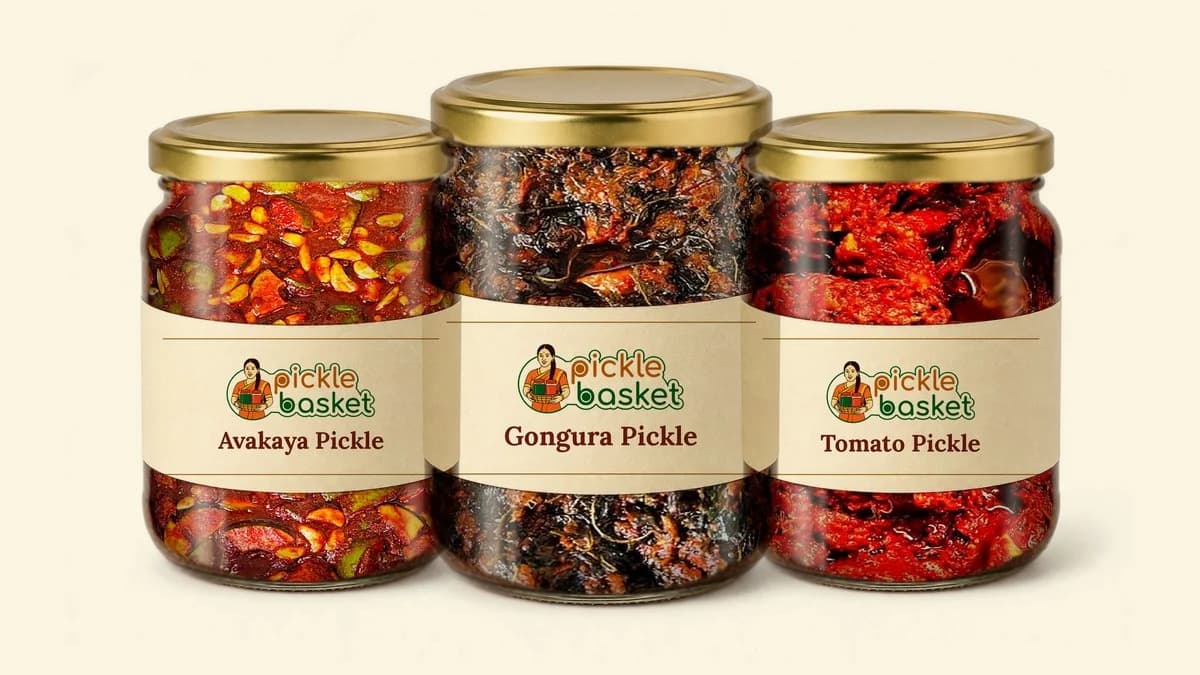
For the main festive meal, a spoon of Avakaya Pickle with hot rice and ghee is the old classic. If your family loves sour, a jar of Gongura Pickle does the same job with the tang of sorrel leaves. We have a longer note on it in our gongura pickle guide. Gongura has another small place in Deepavali too, which I will come to below.
Alongside the fried snacks: Tomato
A jar of Tomato Pickle is soft, tangy and gentle enough for children, so it is the one I put out when cousins are visiting. It goes well with plain rice, curd rice and also with a hot garelu or a crisp dosa from the evening tiffin.
For the sweet-and-sour lovers: Ginger
Ginger Pickle (allam pachadi) is made with jaggery and tamarind, so it sits somewhere between the sweet table and the spicy one. People who say they do not like spicy pickles sometimes surprise themselves with this jar.
For the non-veg Deepavali lunch
If your festival lunch includes chicken, Gongura Chicken Pickle and Chicken Boneless Pickle are the two jars our customers ask for most often. Both go well beside hot rice, and the boneless one is easy to serve to guests who do not want to deal with bones in the middle of a festive meal. If you cannot decide between the two chicken options, our guide to chicken pickle versus boneless chicken pickle explains the difference.
The Evening: Lakshmi Puja and Rows of Lamps
Deepavali literally means "a row of lamps". As the sun goes down, the clay lamps (pramidalu) are filled with oil and lined up along the doorstep, the window ledges and the compound wall. The Lakshmi puja is done at dusk, and then it is time for the tapasulu. If you want to read how the festival is kept across Andhra and Telangana, Temples and More has a clear festival page.
There is one little tradition from the Andhra side that I love. In some homes, after the puja, children light small bundles of cloth soaked in oil and tied to gongura stalks, called diviteelu, and tap them on the ground while chanting "Dibbu dibbu Deepavali, malli vachche Nagula Chavithi." It is only done with an elder standing close by, of course, and it is a nice reminder that gongura is not only food in our culture.
After Deepavali Comes Karthika Masam
The day after Deepavali, the lamp-lit month of Karthika begins. This year Karthika masam starts around 10 November. Many families light a lamp every evening, and weekends often turn into picnics under the trees. If your family goes to a vanabhojanam, our note on Karthika masam picnics and what pickles to pack will help you plan the jars.
A Practical Word About Ordering Before Deepavali
I would like to be honest here, because I do not want anyone disappointed on festival day. Every jar at Pickle Basket is made fresh in small batches after your order. Orders are usually handed to the courier within 1 to 2 business days, and standard delivery usually takes another 3 to 6 business days, as our shipping policy says. If you are reading this in the first week of November, a new order will probably not reach you before 8 November.
What I would suggest is this: order now for the days after Deepavali. The Karthika masam meals, the visits from relatives, and the box that goes back with your guests are all good reasons to have a fresh jar at home. If you are sending a jar as a gift to someone in another city, our post on Andhra pickles as festive gifts has ideas on matching the jar to the person.
On payment, Cash on Delivery is available for serviceable pincodes. You pay a ₹99 advance online to confirm the order, and a ₹50 COD fee is added by our delivery partner. The balance is paid at your door, in cash or UPI. If you pay fully online by UPI or card, the ₹50 COD fee is skipped. Please check each product page for the current price before ordering.
Order Your Jar
You can order on picklebasket.in, or browse our veg pickles and non-veg pickles first. If you would rather talk to someone, message us on WhatsApp at +91 9848658989 and tell us what your family likes. Cash on Delivery is available.
Whether your Deepavali is a quiet one with a few lamps and a box of ariselu, or a house full of cousins and fireworks, I hope there is a hot plate of rice, a spoon of something tangy and the people you love around it.
Happy Deepavali to you and your family,
Vidya
Founder, Pickle Basket
About the Author
Vidya
Founder, Pickle Basket