

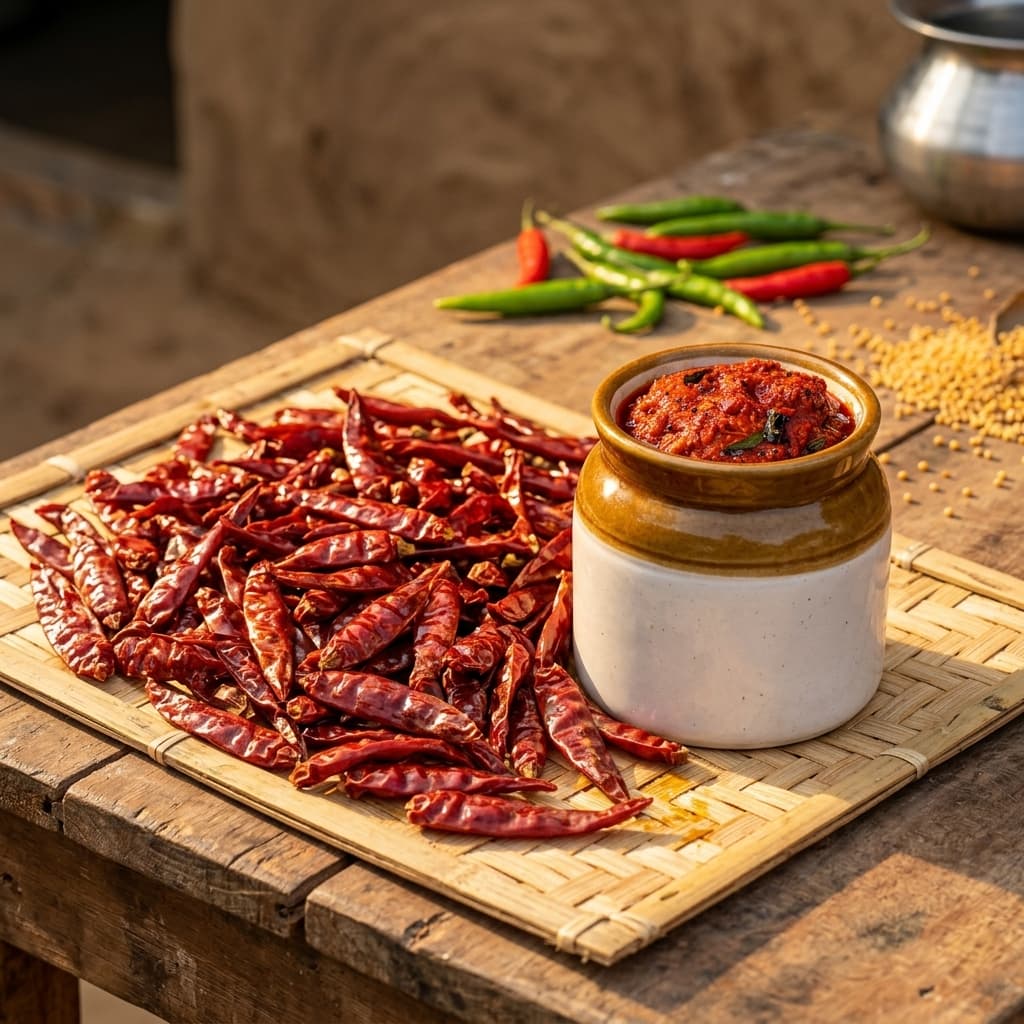
Andhra Pickle vs North Indian Achar: Oil, Spice, Texture and Taste Compared
India has hundreds of pickle traditions, and two of the most loved are North Indian achar and Andhra pachadi. If you grew up with one, the other can feel surprising. A Punjabi friend tasting avakaya for the first time usually goes quiet, then reaches for water, and then asks for more. A Telugu friend tasting mustard-oil mango achar often says, "nice, but where is the karam?"
Neither is better. They are just built on different ideas. Here is a friendly comparison.
The Oil: Mustard Oil vs Groundnut Oil
North Indian achar is usually made with mustard oil (sarson ka tel). Raw mustard oil is pungent and sharp; many families heat it until it smokes and let it cool to soften the bite. That pungency is a big part of the achar's character.
Andhra pickles traditionally use groundnut oil or sesame oil. All our pickles at Pickle Basket list groundnut oil on their product pages. Groundnut oil is milder, so the chilli, mustard seed, garlic and fenugreek in the masala take centre stage.
The Spices
North Indian achar often uses a panch phoron-like mix or a blend of:
- Fennel (saunf)
- Nigella (kalonji)
- Fenugreek (methi)
- Mustard seeds
- Carom (ajwain) in some recipes
- Turmeric and red chilli in moderate amounts
The flavour is aromatic, a little sweet from fennel, with mustard oil's pungency.
Andhra pickles typically use:
- Ground mustard seeds, often in large amounts, especially in avakaya
- Fenugreek
- Red chilli powder, generously
- Garlic, often whole cloves
- Turmeric, salt, and sometimes asafoetida, ginger, curry leaves, cumin or tamarind
The flavour is hotter, sharper and more garlicky.
Heat Level
In general, Andhra pickles are hotter. Andhra is famous for its red chillies, and pickles use them freely. A spoon of North Indian mango achar is usually manageable for most people; a spoon of avakaya or Pandu Mirchi Pickle can make a newcomer's eyes water.
That said, not every Andhra pickle is fiery. Our Tomato Pickle is one of the milder, tangier ones.
What Gets Pickled
Both regions pickle mango, lemon and chilli. But each has its specialities.
Common in North Indian achar:
- Mango (aam), lemon (nimbu), green chilli (hari mirch)
- Carrot, cauliflower and turnip (gajar-gobhi-shalgam) in winter
- Lotus stem, kathal (raw jackfruit), karonda
- Stuffed red chillies (bharwan lal mirch)
Common in Andhra pickles:
- Raw mango in several forms: chunky avakaya, peeled magaya, grated koru pachadi
- Gongura (red sorrel leaves), very rare outside the Telugu states
- Tomato, ginger, amla, coriander leaves, drumsticks
- Chicken, mutton and prawns, which are very much a part of the Andhra pickle tradition
Texture
North Indian achar often has larger, firmer pieces sitting in oil and spice, and some, like the winter vegetable pickle, have a slightly fermented, sour liquid.
Andhra pickles range widely:
- Chunky like avakaya, with pieces of mango on the shell
- Paste-like like gongura, tomato, ginger and pandu mirchi
- Grated like koru pachadi
- Meaty like chicken and prawn pickles, where cooked pieces are coated in masala
How They Are Eaten
North Indian achar usually sits beside paratha, puri, dal-chawal, khichdi or a thali. A small piece adds tang to the meal.
Andhra pickles are often mixed directly into hot rice with ghee, eaten as the first few bites of a meal. They also go with idli, dosa, pesarattu, upma and curd rice.
Sun, Time and Freshness
Many North Indian achars are traditionally sun-cured for days or weeks on terraces in glass or ceramic jars, and they mature slowly over months. The sun and time do a lot of the work.
Andhra pickles also have a strong home tradition: in summer, families buy mangoes in bulk and fill big jars for the year. But many Andhra pickles, especially paste-style pickles like tomato, ginger and gongura, and all the non-veg pickles, are cooked with spices and oil rather than sun-cured.
At Pickle Basket, we prepare every jar in small batches after you order, in our kitchen in Tadepalligudem, so the pickle reaches you fresh rather than after months on a shop shelf.
Which Andhra Pickle Should a North Indian Achar Lover Try First?
- If you love aam ka achar: Try Avakaya for bold heat, or Magaya for something softer with a little jaggery.
- If you love nimbu achar: Try our spicier Andhra Lemon Pickle.
- If you love hari mirch achar: Try Kothimeeri Pickle, made with coriander leaves and green chillies.
- If you love sweet-sour chutneys: Try Ginger Pickle with jaggery and tamarind.
- If you eat non-veg: Try Chicken Pickle; North India has few meat pickles, so it is a whole new experience.
Frequently Asked Questions
Which oil is used in Andhra pickles?
Traditionally groundnut or sesame oil. Our product pages list groundnut oil for our pickles.
Are Andhra pickles spicier than North Indian pickles?
Generally yes. Andhra pickles use more red chilli. Start with a small amount if you're new.
Can I eat Andhra pickles with paratha?
Absolutely. Avakaya, lemon and tomato pickle all go well with aloo paratha, rotis and khichdi.
Do Andhra pickles use mustard oil?
Our pickles use groundnut oil. Mustard appears as ground or whole mustard seeds in the masala.
Taste the Andhra Side
If you've grown up on achar, Andhra pickles will open a new door. Start with a small 250 g jar or two from our vegetarian or non-veg pickles. Every jar is made fresh after you order in Tadepalligudem, and Cash on Delivery is available for serviceable pincodes. For more about the heat, read Guntur red chillies: the fiery heart of Andhra pickles.
With love from our kitchen,
Vidya
Founder, Pickle Basket
About the Author
Vidya
Founder, Pickle Basket