

Ugadi Pachadi and the Start of Pickle Season: How the Telugu New Year Welcomes Mango Time
Ugadi is the Telugu New Year, usually falling in March or April. Doorways are decorated with mango leaf torans, homes are cleaned, new clothes are worn, and in the afternoon families gather to listen to the panchanga sravanam, the reading of the year's almanac.
But for food lovers, Ugadi means two things. First, the special Ugadi pachadi, a little bowl of six tastes that every Telugu person eats on the morning of the new year. And second, the beginning of raw mango season, which means pickle-making season is just around the corner.
What Is Ugadi Pachadi?
Ugadi pachadi is not a pickle. It is a festive preparation, almost like a drink or a loose chutney, made only on Ugadi. It brings together six tastes (shadruchulu), each representing a different experience of life:
- Sweet from jaggery: happiness
- Sour from tamarind: challenges and surprises
- Bitter from neem flowers: sadness and difficulties
- Spicy from pepper or green chilli: anger or heat in life
- Salty from salt: interest and zest
- Tangy/astringent from raw mango: new beginnings and surprises
The idea is beautiful: the new year will bring all kinds of experiences, and we accept them all together, in one spoon.
How Ugadi Pachadi Is Made
Recipes vary from family to family, but a simple version is:
- Soak a small ball of tamarind in water and extract the juice.
- Add grated jaggery and stir until it dissolves.
- Add a handful of fresh neem flowers (vepa puvvu).
- Add finely chopped raw mango.
- Add a pinch of salt and a little pepper or chopped green chilli.
- Some families add banana pieces, sugarcane bits or grated coconut.
It is offered to God first and then shared with everyone in the house before anything else is eaten.
The Ugadi Festival Meal
After the pachadi, the festive meal follows. Common dishes include:
- Pulihora (tamarind rice), often made with raw mango in Ugadi season
- Bobbatlu or polelu (sweet flatbread with dal and jaggery)
- Payasam
- Pappu, a seasonal curry, and plain rice
- Pickles, of course, on the side
A small spoon of a good pickle sits beside the festive rice. In many homes, last year's avakaya jar is nearly finished by Ugadi, which is a hint of what is coming next.
Ugadi Marks the Start of Mango Time
The raw mango in Ugadi pachadi is not an accident. Ugadi falls just as the new raw mangoes arrive in markets. In the weeks that follow, mangoes get bigger, sourer and firmer, until they are just right for pickling.
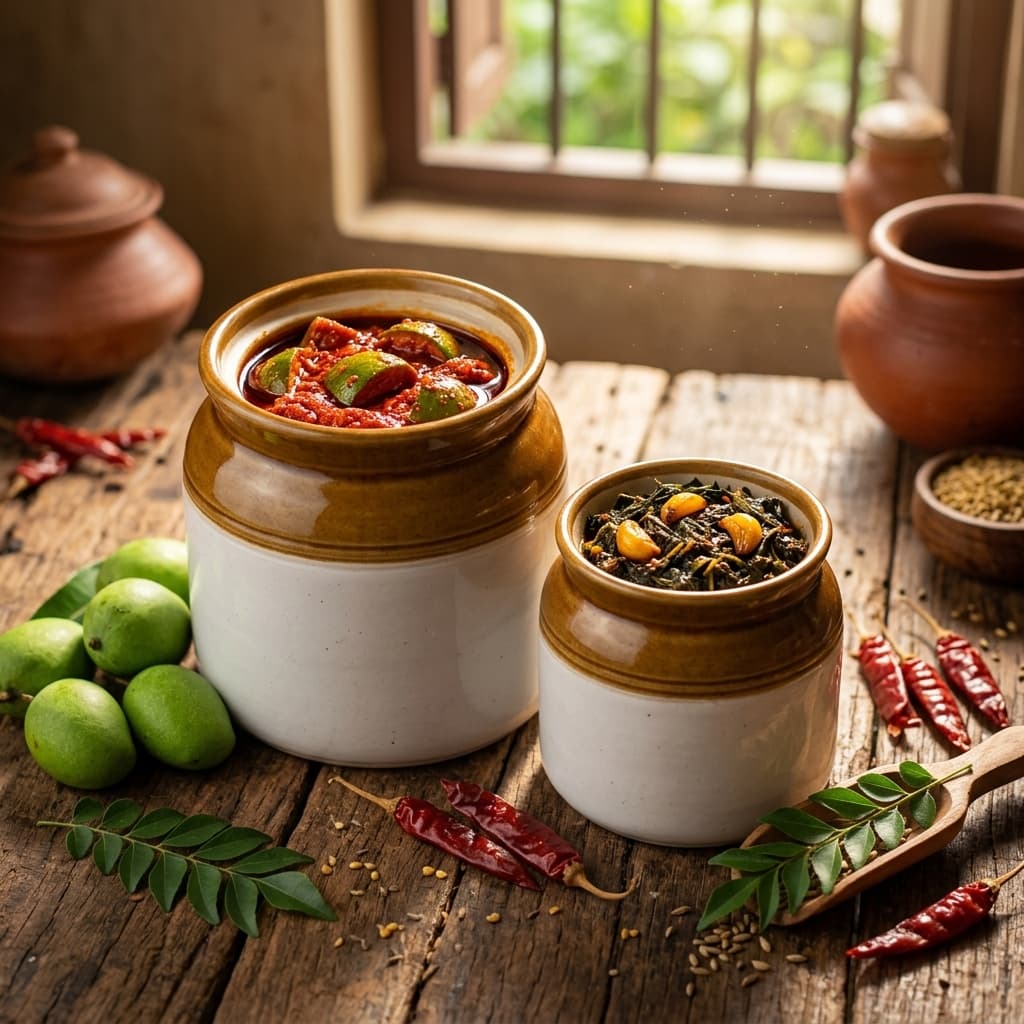
In many Andhra homes, the months after Ugadi are when the big annual pickle-making happens: buying mangoes in bulk, cutting them with the shell, drying them, grinding mustard and chilli, and filling the big ceramic jars (jaadilu) for the whole year. We wrote more about that tradition and the raw mango pickles it produces in Avakaya vs Magaya.
Pickles That Fit the Ugadi Table
If you are hosting an Ugadi lunch, these pickles fit beautifully with the festive meal:
- Avakaya Pickle: The king of the Telugu table, perfect with pappu and ghee.
- Magaya Pickle: Softer and slightly sweet, lovely with curd rice after a heavy meal.
- Koru Pachadi: Grated raw mango pickle, a nod to the raw mango theme of Ugadi.
- Ginger Pickle: Sweet, sour and spicy, a little like the six tastes in one jar.
- Lemon Pickle: For curd rice at the end.
Many Telugu families keep Ugadi vegetarian, so the veg range is the natural choice for the festival day.
Why We Make Our Pickles After You Order
Traditional homes made a year's worth of avakaya in one go after Ugadi and stored it in large jars. We follow the same recipes, but we prepare jars in small batches after each order instead of filling a warehouse. That way, the pickle that reaches you has been made for you, not sitting on a shelf for months.
Celebrating Ugadi Away From Home
Many Telugu families now celebrate Ugadi far from Andhra and Telangana, in Bangalore, Chennai, Pune, Delhi and beyond. Neem flowers can be hard to find in some cities, and the festival can feel a little quieter than at home.
A few simple things help keep the spirit alive:
- Make Ugadi pachadi with whatever you can find. Even without neem flowers, the sweet-sour-salty-spicy mix keeps the idea.
- Cook one festive dish, even if it is just pulihora or payasam.
- Call the family during panchanga sravanam.
- Keep a jar of pickle from home on the table. Taste is memory.
Frequently Asked Questions
Is Ugadi pachadi a pickle?
No. It is a special preparation made only on Ugadi with six tastes: sweet, sour, bitter, spicy, salty and tangy. It is eaten fresh, not stored.
What are the six tastes of Ugadi pachadi?
Sweet (jaggery), sour (tamarind), bitter (neem flowers), spicy (pepper or chilli), salty (salt) and tangy (raw mango).
Why is Ugadi linked to mango pickles?
Ugadi falls as raw mangoes arrive. The months after Ugadi are traditionally when Andhra homes make their year's avakaya and other mango pickles.
Which pickles go well with an Ugadi meal?
Avakaya, Magaya, Koru Pachadi, Ginger and Lemon Pickle all suit a festive vegetarian Ugadi lunch.
Begin the New Year With a Full Pickle Jar
Whether you are celebrating at home in Andhra or far away, bring the taste of the Telugu table to your Ugadi meal. Browse our vegetarian pickles, made fresh in small batches after you order in Tadepalligudem, with Cash on Delivery available for serviceable pincodes. Message us on WhatsApp at +91 98486 58989 if you'd like help choosing.
Ugadi subhakankshalu.
With love from our kitchen,
Vidya
Founder, Pickle Basket
About the Author
Vidya
Founder, Pickle Basket