

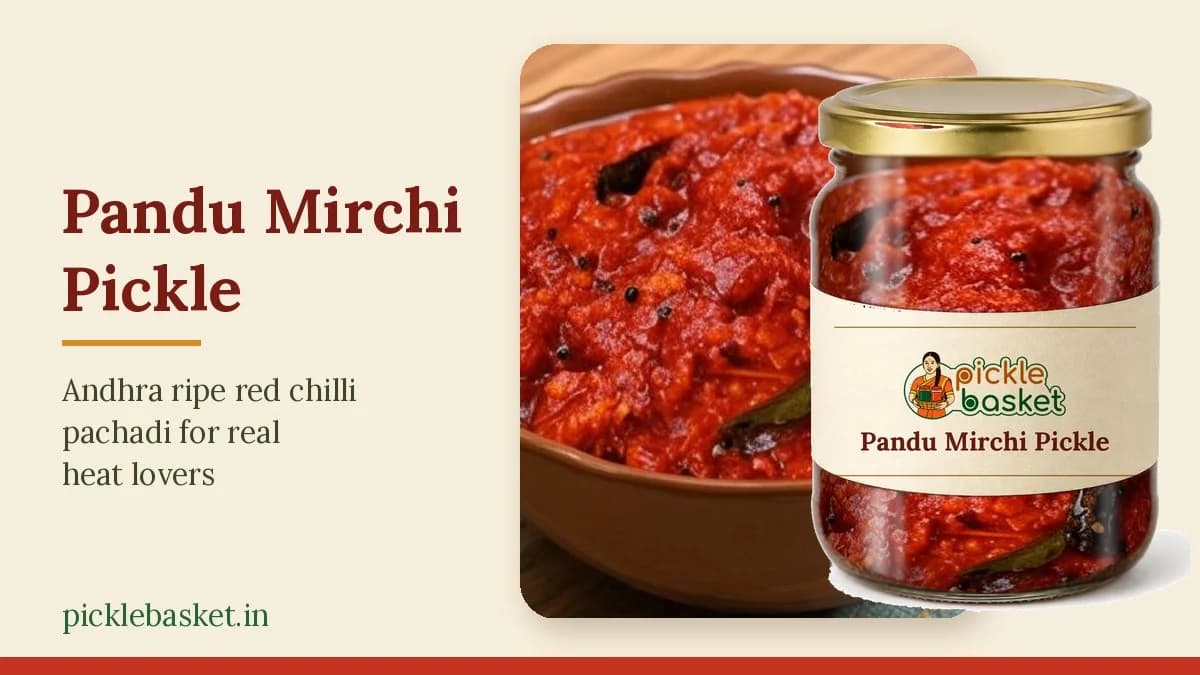
Pandu Mirchi Pickle: The Andhra Ripe Red Chilli Pachadi for People Who Want Real Heat
Every Telugu household has a "spice person". The one who tastes the sambar and quietly reaches for more chilli. The one who says the restaurant biryani was "okay, but not spicy". When relatives visit, someone always asks, "Is there anything hot in the house?"
For that person, there is only one jar worth opening: pandu mirchi pachadi.
What Is Pandu Mirchi Pickle?
In Telugu, pandu means ripe and mirchi (or mirapakaya) means chilli. So pandu mirapakaya pachadi is a pickle made from chillies that were left on the plant until they turned fully red, and then picked fresh, not dried.
That one detail is what makes it special. Most Andhra pickles get their colour and heat from dried red chilli powder, the karam that sits in every Telugu kitchen. Pandu mirchi uses the whole fresh fruit instead. The chillies are ground coarse into a thick, bright-red paste, so the pickle is mostly chilli, rather than chilli coating something else.
If you have read our glossary of Telugu pickle names, you will have seen it listed among our jars. This post is the full story.
Fresh Ripe Chilli vs Dry Chilli Powder
Why go to the trouble of using fresh red chillies when chilli powder is easier? Because they really do taste different.
- Dry chilli powder gives a toasty, earthy heat. It is wonderful in avakaya and in our post on Guntur red chillies we wrote about how much colour and aroma the dried pods bring.
- Fresh ripe chillies are juicier and fruitier. A ripe chilli is the mature fruit of the plant (botanically, a chilli pepper is a berry), and when it is ground fresh you taste a little of that fruit before the fire arrives.
So pandu mirchi is not just "extra spicy pickle". It has a fresh, almost tangy chilli flavour that you simply do not get from powder alone. People who try it for the first time often say it tastes "brighter" than they expected.
What Goes Into Our Pandu Mirchi Pickle
The ingredients on our Pandu Mirchi Pickle page are short and honest: fresh red chillies, mustard seeds, fenugreek seeds (menthulu), salt, turmeric, curry leaves, groundnut oil, garlic and dried chilli.
Here is how it comes together in our kitchen:
- The fresh red chillies are washed and then dried thoroughly, because even a drop of water is the enemy of a pickle.
- They are ground coarse with salt and turmeric. Not smooth, so the pachadi keeps a little texture.
- Mustard, fenugreek, garlic, dried chilli and curry leaves are tempered in groundnut oil, the popu that gives every Andhra pickle its smell.
- The tempering is mixed into the chilli paste, and the jar is packed with the oil on top.
There is no sugar or jaggery to soften it, and the garlic and mustard keep it savoury and sharp. Like every jar we sell, it is made only after your order reaches us.
How Hot Is It, Really?
Let us be straight: this is one of the hottest pickles we make. The heat in chillies comes from a compound called capsaicin, and a pickle that is mostly chilli has a lot of it in every spoon.
Chilli heat is usually compared on the Scoville scale, but at home we use a simpler test. If you finish a plate of avakaya annam without reaching for water, you are ready for pandu mirchi. If avakaya already makes your eyes water, start with a tiny amount, about the size of your fingernail, and build up.
The good news is that the heat is clean. It builds, it peaks, and it fades without hanging around for an hour.
Ways to Eat Pandu Mirchi Pachadi
A little goes a very long way, which is why one jar lasts longer than you would think.
The classic: hot rice, ghee, a pinch of pachadi
Take a plate of steaming rice, add a generous spoon of ghee, and mix in just a little pandu mirchi. Ghee carries the chilli flavour through every grain and takes the edge off the heat. This is how most Telugu grandmothers would tell you to try it first.
With pappu and rice
On days when the dal is plain, a small dab of pandu mirchi on the side of the plate turns a simple pappu annam into a proper meal. Take a little with each mouthful rather than mixing it all in.
Beside dosa, idli and pesarattu
Instead of a full bowl of chutney, put a tiny line of pandu mirchi next to your dosa or idli. It is also lovely with crisp pesarattu, the green moong dosa from Andhra, though many homes will also reach for allam pachadi there.
With curd rice, to cool things down
Curd rice and pandu mirchi are a famous pair for a reason. The cool, mild perugu annam makes the heat pleasant, and the chilli wakes up the curd rice. If you are new to this pickle, this is the gentlest way in.
In a quick upma or egg fry
Some of our customers stir a quarter spoon into upma or scrambled eggs while cooking. The oil and garlic in the pickle do the seasoning work for you.
Who Will Love This Jar?
- Heat lovers who find most pickles too tame
- Telugu families living away from home who miss that sharp, fresh-chilli taste from their mother's kitchen
- People who already love avakaya and want a second jar with a completely different kind of fire
- Anyone who eats plain dal and rice often and wants one spoon of something bold on the side
If you are building a mixed order, pandu mirchi pairs well with a gentler everyday jar like our Tomato Pickle or Lemon Pickle, and one mango jar such as Avakaya. That way there is something for the spice person and something for everyone else at the table. And if you want a sensible idea of how much pickle to enjoy each day, our post on eating pickles in moderation is worth a quick read.
Pack Sizes and Prices
Pandu Mirchi Pickle comes in three sizes. At the time of writing, the prices on our site are:
- 250 g at ₹219 (MRP ₹399), plenty for one person, since you only need a little at a time
- 500 g at ₹429 (MRP ₹599), for a family with more than one heat lover
- 1 kg at ₹799 (MRP ₹1,099), for big families or for sharing with a sibling's home
Prices can change, so the Pandu Mirchi Pickle page always shows what you will actually pay.
Looking After Your Jar
Always use a clean, completely dry spoon, keep the pickle pressed down under the oil, close the lid tightly and keep the jar in a cool, dry place away from sunlight. We recommend refrigerating it after opening for the best freshness, and the label on your jar carries the shelf-life details for your batch. Our guide on how to store homemade pickles has more simple habits that help.
Frequently Asked Questions
Is pandu mirchi pickle the same as red chilli powder pickle?
No. Pandu mirchi is made by grinding fresh ripe red chillies, so it is a thick chilli paste with a fresh, fruity taste. Pickles made with chilli powder use dried chillies and taste more toasty.
Is it too spicy for children?
It is one of our hottest pickles, so most children will find it too strong. For kids, a milder jar like tomato pickle or koru pachadi is a better start.
Does it contain onion?
No. The ingredients are fresh red chillies, mustard, fenugreek, salt, turmeric, curry leaves, groundnut oil, garlic and dried chilli. It does contain garlic.
Can I order it with Cash on Delivery?
Yes. COD is available for serviceable pincodes: you pay ₹99 online at checkout to confirm the order, a ₹50 COD fee is added, and the balance is paid at your door in cash or UPI. Paying the full amount online by UPI or card skips the COD fee.
Order Pandu Mirchi Pickle Today
If there is a spice person in your home, this is the jar to surprise them with. Order Pandu Mirchi Pickle right here on picklebasket.in. Your jar is made fresh after you order, it leaves our kitchen within 1 to 2 business days, and standard delivery usually takes 3 to 6 business days after dispatch, depending on your pincode. Prefer to chat? Send a WhatsApp to +91 9848658989 and our team will place the order for you. Cash on Delivery is available too. Browse all our vegetarian pickles to complete your order.
From our Godavari kitchen to yours,
Vidya
Founder, Pickle Basket
About the Author
Vidya
Founder, Pickle Basket