

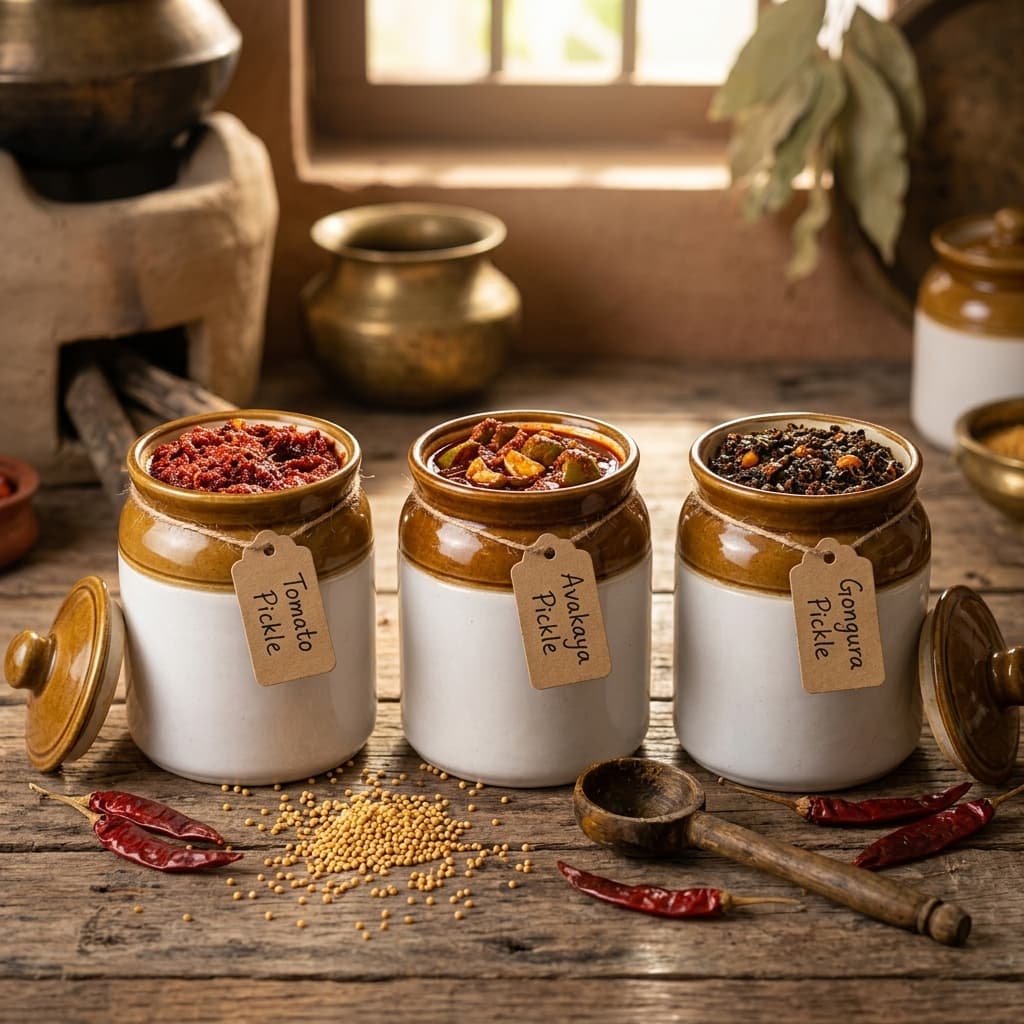
How Much Pickle Is Okay Per Day? A Sensible Guide to Enjoying Andhra Pickles
"Don't eat so much pickle, it is not good for you!" Almost every Telugu child has heard this from a grandmother, usually while she was quietly adding another spoon of avakaya to her own plate.
As someone who makes pickles for a living, I get asked about this often. People love pickles, but they also worry about salt, oil and spice. So let me share an honest, practical view. I am not a doctor or a nutritionist, and if you have a health condition, your doctor's advice comes first. But here is how traditional Telugu homes have always thought about pickle on the plate.
Pickle Was Never Meant to Be the Main Dish
In a traditional Andhra meal, pickle is a side, not a curry. It sits in a small corner of the banana leaf. You take a little, mix it with a handful of rice and ghee, and eat it at the start of the meal to wake up the appetite. Then you move on to pappu, curry, sambar or rasam, and finally curd rice.
That is the secret. The flavour of a good Andhra pickle is so concentrated that a small amount is enough to flavour a whole handful of rice. If you find yourself eating pickle by the spoonful as a curry, that is when it becomes too much.
So How Much Is "a Little"?
There is no single number that is right for everyone, and we will not pretend there is. Your age, activity, health and the rest of your diet all matter. But as a home guide, many families follow a simple rule:
- About a teaspoon of masala, or one or two pieces, per meal is a typical serving for an adult.
- Children usually need only a little lick of masala mixed into rice.
- Non-veg pickles: a piece or two with some masala is enough for a plate of rice. That is also what we say on our Chicken Pickle page.
You will notice something nice when you eat this way. A 250 g jar lasts longer, every meal tastes better, and you never feel heavy.
What Is Actually in an Andhra Pickle?
It helps to know what you are eating. A traditional Andhra pickle is made from a main ingredient, such as mango, lemon, tomato, gongura, chicken or prawn, plus:
- Salt, which is a key part of how pickles keep
- Oil, which forms a protective layer over the pickle. We use groundnut oil.
- Red chilli powder, for heat and colour
- Spices like mustard, fenugreek, turmeric, garlic and ginger, depending on the pickle
Because salt and oil do important work in preservation, pickles are naturally salty and oily. That is not a flaw; it is how they have been made for generations. It simply means portion size matters.
You can read the full ingredient list of every pickle on its product page. For example, our Tomato Pickle lists tomatoes, red chilli powder, mustard, fenugreek, curry leaves, salt, turmeric, cumin, garlic, groundnut oil, tamarind and lemon juice.
Simple Habits for Enjoying Pickles Sensibly
Pair pickle with plain food
Pickle shines with plain rice, curd rice, dal, idli, dosa or chapati. These plain foods balance the strong taste, so you naturally use less.
Drain the extra oil if you like
If you want less oil, lift the pickle piece with a dry spoon and let the oil drip back into the jar. The masala clinging to the piece still gives plenty of flavour. Leave the rest of the oil in the jar, where it protects the remaining pickle.
Balance the rest of the meal
If you are having pickle, go a little lighter on salt in the curry or skip the papad and fried snacks in the same meal.
Use a small serving bowl
Instead of keeping the jar on the dining table, put a small portion in a little bowl. When the bowl is empty, you are done. This also keeps the main jar safer from wet spoons.
Choose gentler pickles for everyday
If you eat pickle every day, it can help to rotate. Bold, fiery pickles like Pandu Mirchi can be for special meals, while tangier, gentler options like Lemon Pickle or Tomato Pickle can be your daily companions.
Who Should Check With a Doctor First?
Please speak to your doctor about pickles and salty foods if you:
- Have high blood pressure or have been told to reduce salt
- Have kidney or heart conditions
- Have acidity, ulcers or digestive issues that spicy food worsens
- Are pregnant and unsure about spicy or salty foods
- Have any food allergy; please read the ingredient list on each product page and contact us if you have a question about an ingredient
This is not to frighten anyone. Pickles have been part of Indian meals for centuries. But your doctor knows your body, and a small change in portion is often all that is needed.
Why Freshly Made Pickles Feel Better to Eat
Many people tell us that a freshly made, homemade-style pickle feels lighter and tastes cleaner than an old jar from a shop shelf. We cannot make health promises, but we can tell you how we make ours: in small batches after you order, in our kitchen in Tadepalligudem, using familiar ingredients you can read on every product page, and no artificial preservatives. If you are curious about the traditional side, our earlier article on the health side of traditional Indian pickles is a good read.
Frequently Asked Questions
Is it okay to eat pickle every day?
Many Indian families eat a small amount of pickle every day as part of a balanced meal. The key is a small portion with plain food. If you have a health condition, ask your doctor.
Which Andhra pickle is the mildest?
Tomato Pickle is one of our milder, tangier pickles, and many families start children with it. Magaya is softer and slightly sweet, but still spicy.
Can I reduce the oil when eating pickle?
Yes. Let the extra oil drip back into the jar before you put the pickle on your plate. Keep the oil in the jar, where it protects the pickle.
Are your pickles free of artificial preservatives?
Yes. Our pickles are made with traditional methods using salt, oil and spices, and no artificial preservatives.
Enjoy a Little, Enjoy It Often
A good pickle is meant to be savoured, not shovelled. Pick one or two jars that you truly love and enjoy a spoon at each meal. If you would like help choosing gentler options for everyday eating, browse our vegetarian pickles or message us on WhatsApp at +91 98486 58989.
With love from our kitchen,
Vidya
Founder, Pickle Basket
About the Author
Vidya
Founder, Pickle Basket