

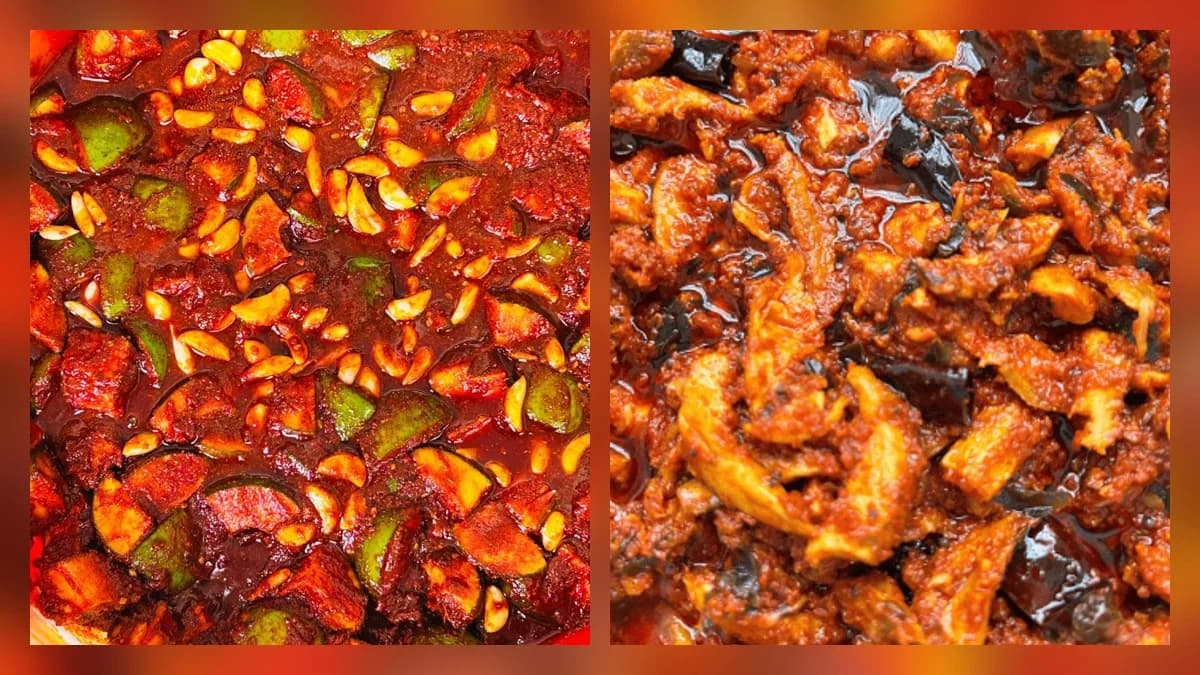
Avakaya Season: The Summer Mango Pickle Tradition in Andhra Homes, Remembered
If you grew up in an Andhra village or small town, you remember avakaya season. Some time after Ugadi, when the summer heat set in and the mango trees were heavy with hard green fruit, the whole household would turn into a pickle factory for a few days.
The grandmothers took charge. The men were sent to the market for mangoes. Children were given small jobs and told to keep away from the chilli powder. Huge ceramic jars were washed and dried in the sun. And at the end of it, the year's supply of avakaya sat in the storeroom, the most precious thing in the house.
This post is a small tribute to that tradition, and to how it lives on today.
Why Avakaya Is Made in Summer
The reason is simple: raw mangoes. Andhra's mango season peaks in the hot months, and the hard, sour green mangoes needed for avakaya are at their best in the weeks after Ugadi. Varieties with firm flesh and good sourness were preferred, and every family had a favourite tree or a trusted seller.
Summer also brought strong sunshine, which helped dry the cut mango pieces, the cleaned jars and the spices. And the dry heat kept moisture, the enemy of pickles, away.
The Ritual, Step by Step
Every family has its own variations, but the outline was the same in most homes.
1. Choosing the mangoes
Mangoes had to be hard, green, sour and fresh, with no soft spots. They were often checked one by one. Many families insisted on a specific variety and would wait until it arrived.
2. Washing and drying
Each mango was washed and then wiped completely dry with a clean cloth. Not a single drop of water could remain. Grandmothers were strict about this.
3. Cutting with the shell
This is the hard part. Avakaya mangoes are cut into pieces with the skin and the hard inner shell (tenka) attached. That needs a special heavy cutter, often a large kathi fixed to a wooden base, and a strong arm. The soft inner seed was removed, and the pieces wiped dry again.
4. Preparing the masala
The spices were sun-dried and ground: mustard (aavalu), red chilli, fenugreek and salt. Some families added turmeric, garlic or other touches. The smell of freshly ground mustard and chilli filled the whole street.
5. Mixing
Mango pieces, masala and oil were mixed in a big wide vessel, usually by hand. This was often done by the eldest woman, who judged the balance by feel and smell.
6. Filling the jars
The mixture went into big ceramic jaadilu, pressed down, and covered with oil. The jar mouth was tied with cloth. After a few days of resting, the pickle was checked, stirred, and topped up with oil if needed.
7. The first taste
The first plate of fresh avakaya annam with hot rice and ghee was a celebration in itself.
More Than a Recipe
Avakaya season was never just about food. It was about family. Sisters came home to help. Neighbours compared notes on mango prices. Recipes were passed from mother-in-law to daughter-in-law. Small jars were filled for married daughters, for relatives in the city, for the family doctor.
Many of us carry those memories with us, even if we now live in apartments with tiny kitchens and no space for jaadilu.
Why Many City Families No Longer Make It
The tradition hasn't disappeared, but life has changed:
- Small kitchens with no space for big jars or wide mixing vessels
- No time, with both partners working
- Finding good mangoes in a city market is hit-or-miss
- The cutter for mango with shell is not something most city homes own
- Humidity in coastal cities makes home pickling trickier
- Elders who led the ritual may no longer be able to do the heavy work
How We Keep the Tradition Alive
At Pickle Basket, we use our family recipe from the Godavari region. Our founder, Vidya Rekha Kondreddi, grew up in Unguturu village with this tradition, and that is where our recipes come from.
The difference is that we prepare our Avakaya Pickle in small batches after you order, instead of making a year's supply at once. It's made with raw mangoes, red chilli powder, mustard seeds, fenugreek, turmeric, salt, asafoetida, garlic, ginger and groundnut oil, in our kitchen in Tadepalligudem.
If you love the softer peeled-mango style, our Magaya Pickle carries the same season's spirit, and our Koru Pachadi is a grated raw mango version. For the difference between the first two, read Avakaya vs Magaya.
Keeping Your Avakaya Like Grandmother Did
Whether you make it yourself or order a jar, the old rules still apply:
- Dry spoon, always.
- Pieces under the oil.
- Lid tight.
- Cool, dark place, away from the stove.
- Refrigerate after opening for the best freshness, as our product page advises.
More tips are in our pickle storage guide.
Frequently Asked Questions
When is avakaya traditionally made?
In the summer months after Ugadi, when hard, sour raw mangoes are in season.
Why is avakaya cut with the shell?
The hard inner shell holds the pieces together and gives avakaya its traditional chunky texture.
Can I get avakaya outside mango season?
Yes. We prepare our Avakaya in small batches after you order.
What is a jaadi?
A jaadi is a large ceramic jar traditionally used in Andhra homes to store pickles.
Taste the Season, Any Time
If you can't gather the family and make avakaya this summer, let us bring a jar of that tradition to you. Order Avakaya Pickle today, with Cash on Delivery available for serviceable pincodes, or message us on WhatsApp at +91 98486 58989.
With love from our kitchen,
Vidya
Founder, Pickle Basket
About the Author
Vidya
Founder, Pickle Basket