

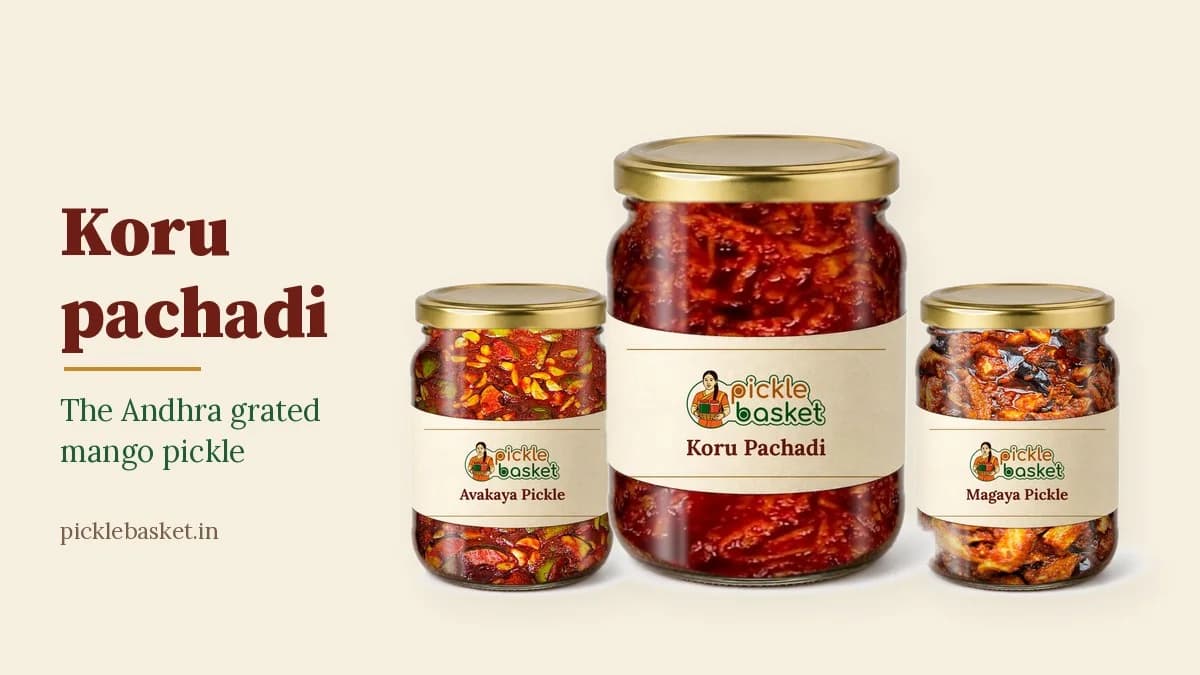
Koru Pachadi: The Andhra Grated Mango Pickle for People Who Don't Like Big Pieces
In every Telugu family there is at least one person who quietly pushes the big avakaya pieces to the side of the plate. They love the taste, they love the masala, but chewing through a hard chunk of mango is simply not their thing. Sometimes it is a grandfather with new dentures. Sometimes it is a seven-year-old.
For all of them, Andhra kitchens have an old answer: koru pachadi, the grated mango pickle.
What Is Koru Pachadi?
In Telugu, koru means grated, and mamidikaya is raw mango. So mamidi koru pachadi is simply raw mango that has been grated fine and pickled, instead of being cut into big pieces. Our glossary of Telugu pickle names in English lists it next to avakaya and magaya, because all three come from the same green mango but end up as very different jars.
Grating the mango changes everything. The masala does not just coat the outside of a piece; it soaks into every shred. The result is soft and thick, somewhere between a pickle and a chutney, and you can spread it with the back of a spoon. Even the Wikipedia page on mango pickle notes this grated, chutney-like style as its own variation.
What Goes Into Our Koru Pachadi
Here is exactly what goes into our Koru Pachadi, as listed on the product page: raw green mangoes, red chilli powder, mustard seeds, fenugreek (menthulu), salt, turmeric, curry leaves, asafoetida (inguva), groundnut oil, garlic, cloves, cardamom, cinnamon and cumin.
The way it comes together in our kitchen:
- The raw mangoes are washed, wiped completely dry and grated.
- The grated mango is mixed with salt and turmeric.
- Red chilli powder, roasted mustard and fenugreek, inguva and garlic go in, plus powdered cloves, cardamom, cinnamon and cumin.
- A tadka of curry leaves in groundnut oil finishes the jar.
That spice blend surprises most people. Cloves and cinnamon are not what you expect in a mango pickle, but in small amounts they add a gentle warmth under the sourness. It does not taste like garam masala. It just tastes rounder.
How It Tastes
Think of the first spoon of avakaya, sour, hot and mustardy, and then imagine it soft enough to melt into rice in one mix. That is koru pachadi.
- Texture: thick, shredded and spreadable, close to a jam, with no seeds or hard skin
- Sourness: clearly mango-sour, because the grated fruit releases all its tang
- Heat: proper Andhra heat from red chilli, but it spreads evenly instead of hitting you in one bite
- Aroma: mustard and garlic first, then that soft warmth from the whole spices
It is still a spicy pickle. Soft does not mean mild, so start small if you are new to Andhra food.
Koru Pachadi vs Avakaya and Magaya
All three of our mango pickles start with raw mango, so people often ask which one to pick. We have already written a full comparison of avakaya vs magaya, so here is just where koru fits in.
- Avakaya is the big-piece, mustard-forward jar. You bite into chunks of mango, and the heat is bold.
- Magaya uses peeled mango pieces and tastes sour with a mellow, slightly sweet note from jaggery.
- Koru Pachadi has no pieces at all. It is the easiest of the three to mix, spread or share.
A simple way to decide: if you eat pickle mostly with hot rice and ghee, avakaya is hard to beat. If you eat pickle with chapati, dosa or bread, koru pachadi is the more practical jar.
Grated Mango Pickles Around India
Grated mango pickles are not only Telugu. In Tamil homes, maangai thokku is a cooked, grated mango pickle that is a staple in many lunch boxes. In Gujarat, chhundo is made from grated green mango too, but it is usually sweet and eaten with theplas and rotis.
Koru pachadi sits on the spicy, sour side of this family. There is no sugar in our recipe; the flavour leans on chilli, mustard and garlic, in line with the tangy, hot character that Andhra cuisine is known for. If you have enjoyed thokku or chhundo, koru pachadi will feel familiar in texture and completely different in taste.
Easy Ways to Eat Koru Pachadi
This is where a spreadable pickle really shines. A few ways it gets used in Telugu homes, and in ours:
On rotis and parathas
Spread a thin layer on a hot chapati, add a little ghee, roll it up and you have a tiffin that needs no curry. Many working families keep koru pachadi just for this.
With dosa, pesarattu and uthappam
On a busy morning, a small spoon beside the dosa saves you grinding a fresh chutney. It also suits pesarattu and onion uthappam.
In a sandwich or on toast
Mix a little koru pachadi with butter and spread it on bread before toasting. Kids who refuse "pickle" often happily eat a "mango sandwich".
Mixed into curd rice
Because it has no pieces, it blends right into perugu annam. A half spoon stirred through turns plain curd rice into something you want to finish.
Who Should Try Koru Pachadi?
- Elders who love mango pickle but find hard pieces difficult to chew
- Children who are just getting used to pickle, in very small amounts
- Chapati and dosa households, where pickle is spread rather than mixed into rice
- People who already love avakaya and want a second mango jar that feels different
If you are building a mixed order, koru pachadi pairs well with one bold rice pickle like avakaya and one gentle everyday jar like our Tomato Pickle.
Pack Sizes and Prices
Koru Pachadi comes in three sizes. At the time of writing the prices on our site are:
- 250 g at ₹219 (MRP ₹399), a good size for trying it for the first time
- 500 g at ₹429 (MRP ₹599), for a family that uses it most days
- 1 kg at ₹799 (MRP ₹1,099), for large families or for sharing between two homes
Prices can change, so the Koru Pachadi page always shows what you will actually pay.
Looking After Your Jar
A grated pickle has more surface for moisture to reach, so a little care matters. Always use a dry spoon, press the pickle down so the oil stays on top, keep the lid tight and store the jar somewhere cool and away from sunlight. Once opened, the fridge is the safest home for it, and the label on your jar tells you the shelf life for that batch. For more everyday habits, read our post on how to store homemade pickles.
Frequently Asked Questions
What does koru mean in koru pachadi?
Koru is the Telugu word for grated. Koru pachadi is raw mango pickle made from grated mango instead of cut pieces.
Is koru pachadi the same as avakaya?
No. Both use raw mango, red chilli and mustard, but avakaya has big mango pieces while koru pachadi is grated and spreadable. Our koru pachadi also has a warm blend of cloves, cardamom and cinnamon.
Is koru pachadi sweet?
No. There is no sugar or jaggery in our recipe. It is sour and spicy.
Can I order koru pachadi with Cash on Delivery?
Yes. For COD you pay ₹99 online at checkout to confirm the order, a ₹50 COD fee is added, and the balance is paid to the delivery person in cash or UPI. Paying the full amount online by UPI or card means no COD fee at all.
Order Koru Pachadi Today
If someone at your table has been leaving the mango pieces behind, let them try Koru Pachadi. Your jar is made only once your order reaches us, it leaves our kitchen within 1 to 2 business days, and standard courier delivery then takes roughly 3 to 6 business days depending on where you live. Order right here on picklebasket.in, or if typing out an address on a website is not your thing, send a WhatsApp to +91 9848658989 and our team will place it for you. Cash on Delivery works too. Our vegetarian pickles page has more jars to keep it company.
From our Godavari kitchen to yours,
Vidya
Founder, Pickle Basket
About the Author
Vidya
Founder, Pickle Basket