

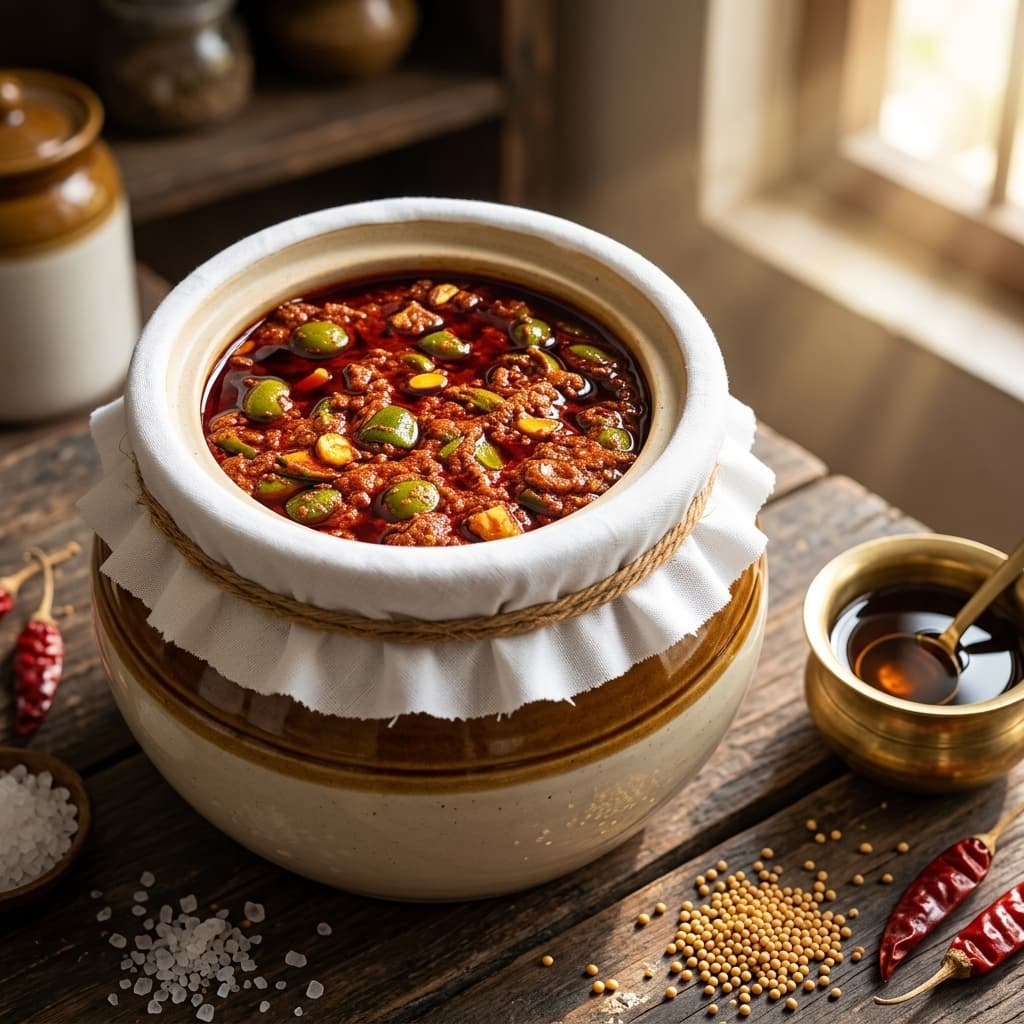
Has My Pickle Gone Bad? Signs of Spoilage, What Causes It and How to Prevent It
There is no sadder moment in a pickle lover's kitchen than opening a favourite jar and seeing a white patch on top. Was it the weather? A wet spoon? Is the rest of the jar safe?
Homemade pickles are made with salt, oil and spices, and when handled well they keep beautifully. But they are still food, and they can spoil if moisture, air or contamination gets in. In this guide, let me share how to recognise the signs, what usually causes them, and how to prevent them.
A simple rule before we begin: when in doubt, throw it out. No jar of pickle is worth an upset stomach.
Normal Changes That Are NOT Spoilage
First, let's clear up a few things that worry people but are perfectly normal in traditional pickles.
- The pickle gets softer over time. Mango, lemon and amla pieces keep softening as they sit in salt and oil. Our product page for Lemon Pickle mentions exactly this: the peel becomes more tender over time.
- The colour deepens. Red chilli masala can turn a deeper, darker red as it ages.
- The oil thickens or looks cloudy in cold weather or in the fridge. It clears again at room temperature.
- The flavour mellows. Sharp mustard notes soften and blend with time.
- Oil separates and rises to the top. That is exactly what it should do.
Signs Your Pickle May Have Spoiled
1. White, grey, green or black fuzzy growth
Fuzzy or cottony spots on the surface, on the pieces or on the inside of the lid are mould. This is the most common sign. It usually starts where the pickle is not covered by oil.
2. A sour, fermented or "off" smell
A good pickle smells of chilli, mustard, garlic and oil. If it smells sharply fermented like spoiled curd, musty, or simply wrong, trust your nose.
3. Bubbles or fizzing
Small bubbles rising when you open the jar, or a fizzy feel on the tongue, can mean unwanted fermentation has started, often because water got in.
4. A slimy or watery layer
If the top looks watery instead of oily, or the pieces feel slimy, moisture has entered the jar.
5. Rancid oil smell
Oil that smells stale, paint-like or bitter in an unpleasant way may have gone rancid, usually from long exposure to air, heat or sunlight.
6. Swollen lid or pressure
If the lid bulges or the jar hisses strongly when opened, do not taste it.
What Usually Causes Spoilage
In our experience, almost every spoiled jar comes from one of these:
- A wet spoon. Even a few drops of water are enough to start trouble. This is the number one cause.
- A used spoon. A spoon that has touched rice, curd or your mouth carries food and moisture into the jar.
- Pickle not covered by oil. The exposed top dries out and becomes a home for mould.
- Lid left loose or open. Humid air gets in, especially during the monsoon or in coastal cities.
- Heat and sunlight. Keeping the jar next to the stove or on a sunny window shelf.
- Pouring leftovers back. Pickle that came out on a plate should never go back into the jar.
- Non-veg pickles kept outside after opening. Chicken, mutton and prawn pickles need the fridge after opening.
What to Do If You See Spoilage
- If you see mould, smell something off, or see bubbles: discard the pickle. Do not scrape off the top and keep eating. Mould can spread below what you can see.
- Wash and dry the jar fully before reusing it, or simply discard it.
- If it happens with a freshly delivered jar from us, please contact us the same day with your order number and photos. Our refund policy asks that quality issues be reported within the same day of receiving the product, so we can look into it.
Simple Habits That Prevent Spoilage
- Dry spoon, every time. Keep a dedicated dry steel spoon just for pickles.
- Keep pieces under the oil. Press them down after each use.
- Close the lid tightly immediately after taking pickle out.
- Use a small serving bowl at meals instead of opening the big jar repeatedly.
- Store in a cool, dry, dark place. Away from the stove, sink and windows.
- Refrigerate after opening for the best freshness, as our product pages advise. For non-veg pickles, this is a must.
- Wipe the rim with a clean dry cloth before closing.
- Follow the shelf-life on your jar label for your batch.
Our full guide on how to store homemade pickles explains each habit with examples.
Why Fresh, Well-Packed Pickles Help
A pickle's life starts in the kitchen where it is made. At Pickle Basket, we prepare every jar in small batches after you order, in our kitchen in Tadepalligudem, using groundnut oil, salt and spices, with no artificial preservatives. Jars are packed in food-grade airtight bottles with induction-sealed lids, so they reach you sealed. From there, these simple habits at home keep them happy until the last spoon.
Frequently Asked Questions
Can I remove the fungus and eat the rest of the pickle?
We do not recommend it. Mould can spread below the visible surface. It is safer to discard the jar.
Why did my pickle get fungus even though I kept it closed?
Most often, a wet or used spoon introduced moisture, or the pickle on top was not covered by oil.
Is it normal for lemon or mango pieces to soften?
Yes. Softening over time is normal and many people prefer the taste of a well-rested pickle.
Should non-veg pickles be refrigerated?
Yes. Keep chicken, mutton and prawn pickles in the fridge after opening and always use a dry spoon.
Fresh Jars, Made to Order
When it's time to replace a jar, choose one made fresh for you. Browse our vegetarian pickles and non-veg pickles, or message us on WhatsApp at +91 98486 58989 with any storage questions. Cash on Delivery is available for serviceable pincodes.
With love from our kitchen,
Vidya
Founder, Pickle Basket
About the Author
Vidya
Founder, Pickle Basket