

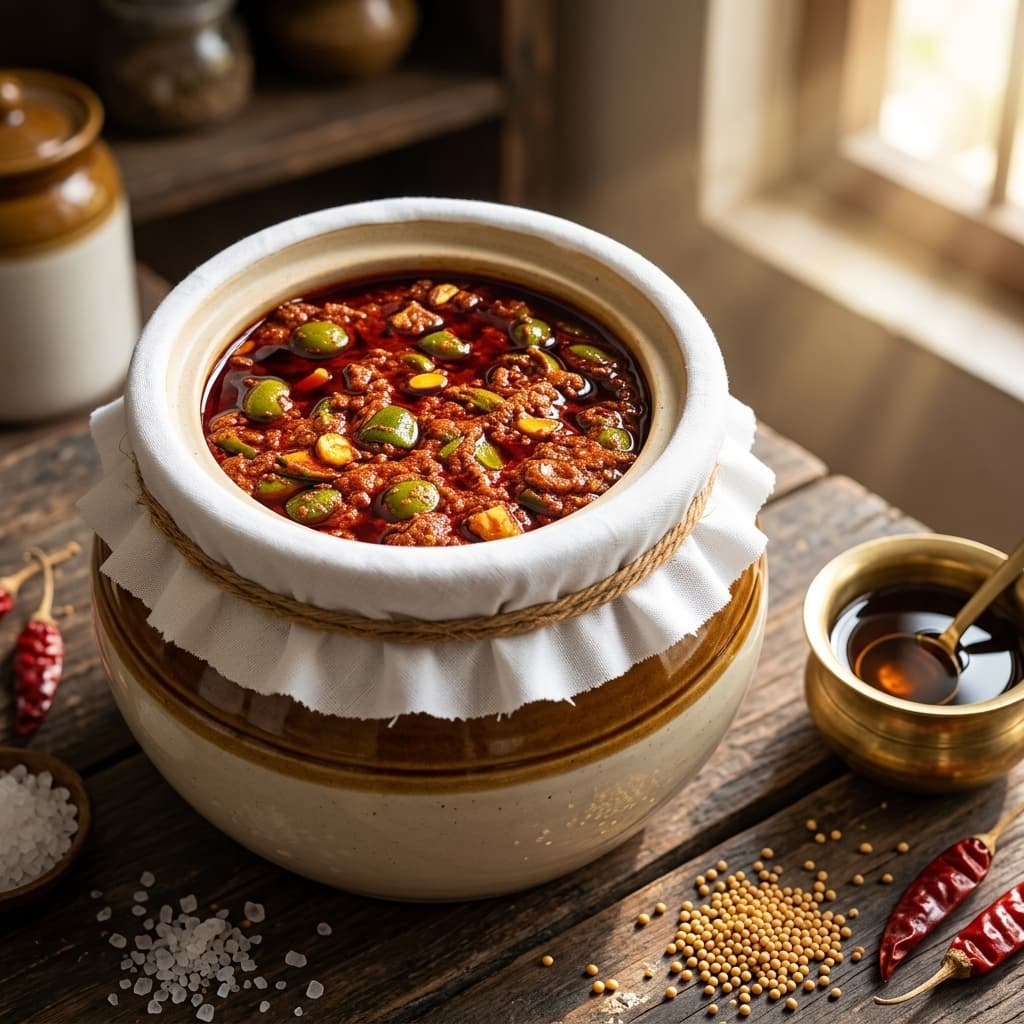
Why Andhra Pickles Have So Much Oil, and Smart Ways to Use the Leftover Pickle Oil
Open a jar of real Andhra pickle and the first thing you see is a shiny layer of red oil on top. For someone new to Andhra food, it can look like a lot. Some people even ask us if we made a mistake.
We didn't. That oil is one of the most important parts of a traditional pickle. In this post, let me explain why it is there, why we use groundnut oil, how you can enjoy pickles with less oil on your plate, and what to do with the delicious masala oil left at the bottom when the pickle is finished.
The Oil Is a Protective Blanket
In a traditional pickle, the oil does a very practical job: it covers the pickle and keeps air and moisture away from it. Moisture and air are what make pickles spoil. When the pieces stay under the oil, they stay protected.
That is why every Telugu grandmother says the same thing: keep the pickle under the oil. When you take some out, press the rest down so it is covered again. When the oil layer disappears, the top of the pickle is exposed, and that is where trouble starts, especially in humid weather.
Salt, chilli, mustard and the oil all work together in traditional preservation. We wrote about this in more detail in the science of salt and oil in Andhra pickles.
The Oil Carries the Flavour
Oil is also how the masala's flavour travels. Chilli, mustard, garlic and fenugreek release their aroma into hot oil. Over time, the oil in the jar takes on the taste of the whole pickle. That is why a little pickle oil on hot rice tastes so good even without a piece of mango.
Why Groundnut Oil?
Different regions of India use different oils for pickles: mustard oil in the north and east, sesame oil (nuvvula nune) in many South Indian homes, and groundnut oil (verusenaga nune) in many Andhra kitchens.
Every pickle we make lists groundnut oil in its ingredients on the product page. It has a mild, nutty flavour that lets the chilli, mustard and garlic shine, and it is the oil we grew up with in Godavari kitchens.
If you have a groundnut (peanut) allergy, please read the ingredient list carefully and speak to your doctor before eating our pickles.
Is All That Oil Unhealthy?
Pickles are meant to be eaten in small amounts, so the oil you actually eat in one serving is small too. The oil in the jar is there to protect the whole jar, not for you to eat it all.
If you want to eat less oil:
- Lift the pickle with a dry spoon and let the excess oil drip back into the jar for a few seconds.
- Take masala and pieces, not oil. The pieces carry plenty of flavour.
- Eat pickle with plain food like rice, curd rice, idli or chapati so a small amount goes a long way.
- Do not drain the oil out of the jar. That leaves the remaining pickle unprotected.
For a balanced view on portions, see our post on the health side of traditional Indian pickles.
What to Do With Leftover Pickle Oil
When the last piece of pickle is gone, many jars still have a few spoons of rich, red, spiced oil at the bottom. Please don't throw it away. Here are some of our favourite uses:
1. Pickle oil rice
Hot rice, a spoon of pickle oil, a pinch of salt if needed, and a spoon of ghee. Mix well. Simple and wonderful, especially with oil from Avakaya or Gongura.
2. Tempering for dal
Use a spoon of pickle oil instead of regular oil for the tadka of your dal. Add a few curry leaves. The dal picks up the pickle flavour gently.
3. Upma and poha
Start your upma or poha with a spoon of pickle oil. Especially good with oil from Lemon Pickle or Tomato Pickle.
4. Roasting vegetables
Toss potato, cauliflower or brinjal pieces in a little pickle oil before roasting or pan-frying.
5. Brushing on dosa or chapati
Brush a thin layer of pickle oil on a dosa while it cooks, or on a chapati before rolling it with vegetables.
6. Egg fry
Fry eggs in a little leftover oil from Chicken Pickle or Prawn Pickle for a spicy breakfast.
7. Fried rice and noodles
A spoon of pickle oil at the start of fried rice or noodles adds instant Andhra heat.
A small caution: use leftover oil from non-veg pickles quickly, keep it in the fridge, and use a clean spoon. With veg pickle oil, keep the jar closed and dry just as you would with the pickle itself.
Signs the Oil Layer Needs Attention
- The top of the pickle looks dry: Press the pickle down so the oil rises over it again.
- Water droplets on the surface: Someone used a wet spoon. Remove the affected top layer.
- Unusual smell or fuzzy growth: Don't take a chance. If you see anything unusual, contact us with your order details.
Frequently Asked Questions
Why is there so much oil in Andhra pickles?
The oil covers the pickle and protects it from air and moisture. It also carries the flavour of the spices. It is part of the traditional method.
Which oil does Pickle Basket use?
Our product pages list groundnut oil in the ingredients of our pickles.
Should I drain the oil from the jar?
No. Keep the oil in the jar to protect the pickle. Just let excess oil drip off the spoon before serving.
Can I reuse leftover pickle oil?
Yes. Use it for pickle rice, dal tempering, upma, dosa, fried rice and more. Use non-veg pickle oil quickly and keep it refrigerated.
Try a Traditional, Oil-Protected Pickle
Taste the difference a proper oil layer makes. Order Avakaya, Tomato Pickle or any of our vegetarian and non-veg pickles. Every jar is made fresh after you order, and Cash on Delivery is available for serviceable pincodes.
With love from our kitchen,
Vidya
Founder, Pickle Basket
About the Author
Vidya
Founder, Pickle Basket